Every time your business sends an SMS—whether it's a marketing message, an OTP code, or a transaction alert—you're handling sensitive customer information that requires protection. Data protection in SMS services isn't just a technical requirement or legal obligation; it's the foundation of customer trust and business credibility in today's digital landscape.
As businesses increasingly rely on SMS for customer communication, understanding what data protection means in this context has become essential. At SMSGatewayHub, we've worked with thousands of businesses navigating the complexities of secure messaging, and we've seen firsthand how proper data protection practices can make or break customer relationships.
This guide explains everything you need to know about data protection in SMS services, from the basics to practical implementation strategies.
Check latest price list - Maximize ROI with our award-winning bulk SMS Sending platform
What Does Data Protection Mean in SMS Services?
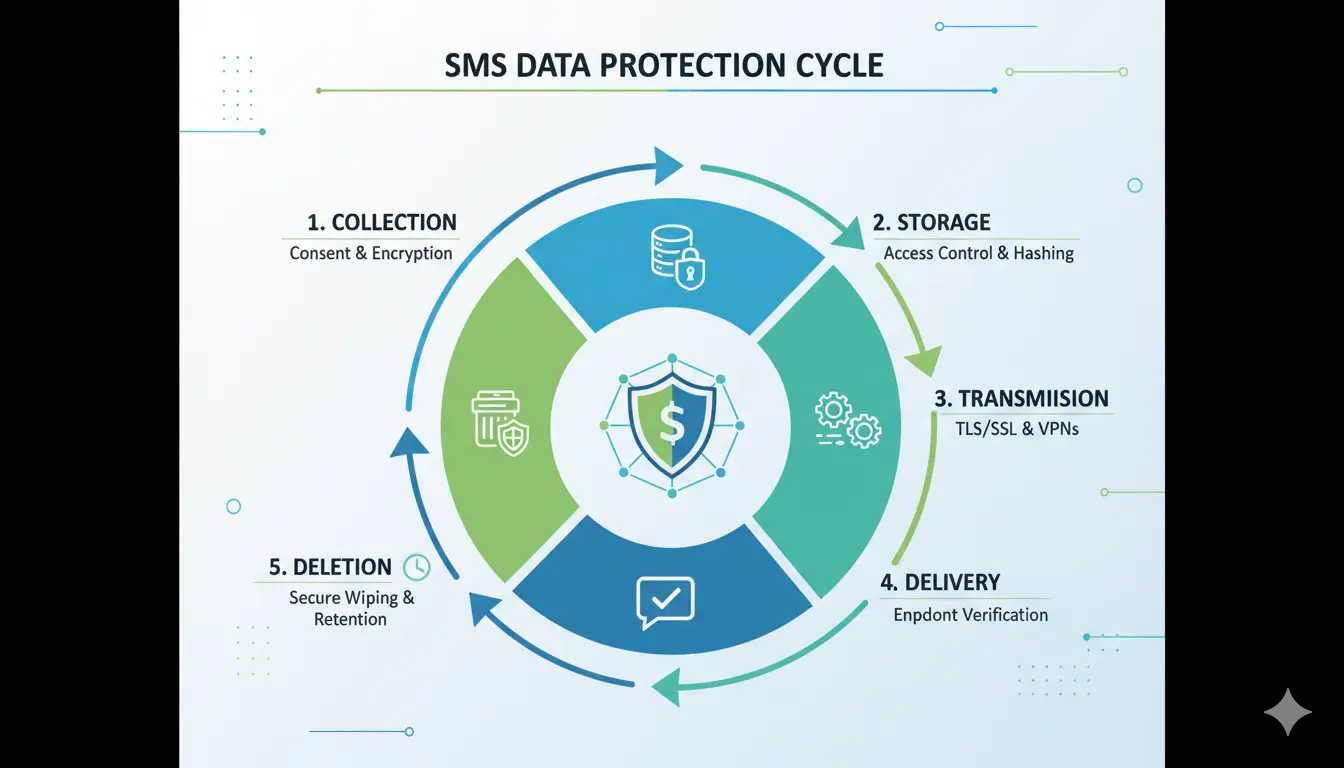
Data protection in SMS services refers to the processes, practices, and technologies used to safeguard customer information throughout the entire SMS lifecycle—from collection and storage to transmission and deletion.
The Core Components
1. Personal Data Security Protecting phone numbers, names, and other personally identifiable information (PII) from unauthorized access, breaches, or misuse.
2. Message Content Protection Ensuring that SMS content—especially sensitive information like OTPs, verification codes, and transaction details—remains confidential during transmission and storage.
3. Consent and Privacy Rights Respecting customer preferences, managing opt-ins and opt-outs properly, and maintaining transparent data usage policies.
4. Regulatory Compliance Adhering to data protection laws such as India's Digital Personal Data Protection Act (DPDP), GDPR in Europe, and industry-specific regulations.
5. Vendor Accountability Ensuring that third-party SMS gateway providers and service partners maintain the same high standards of data protection.
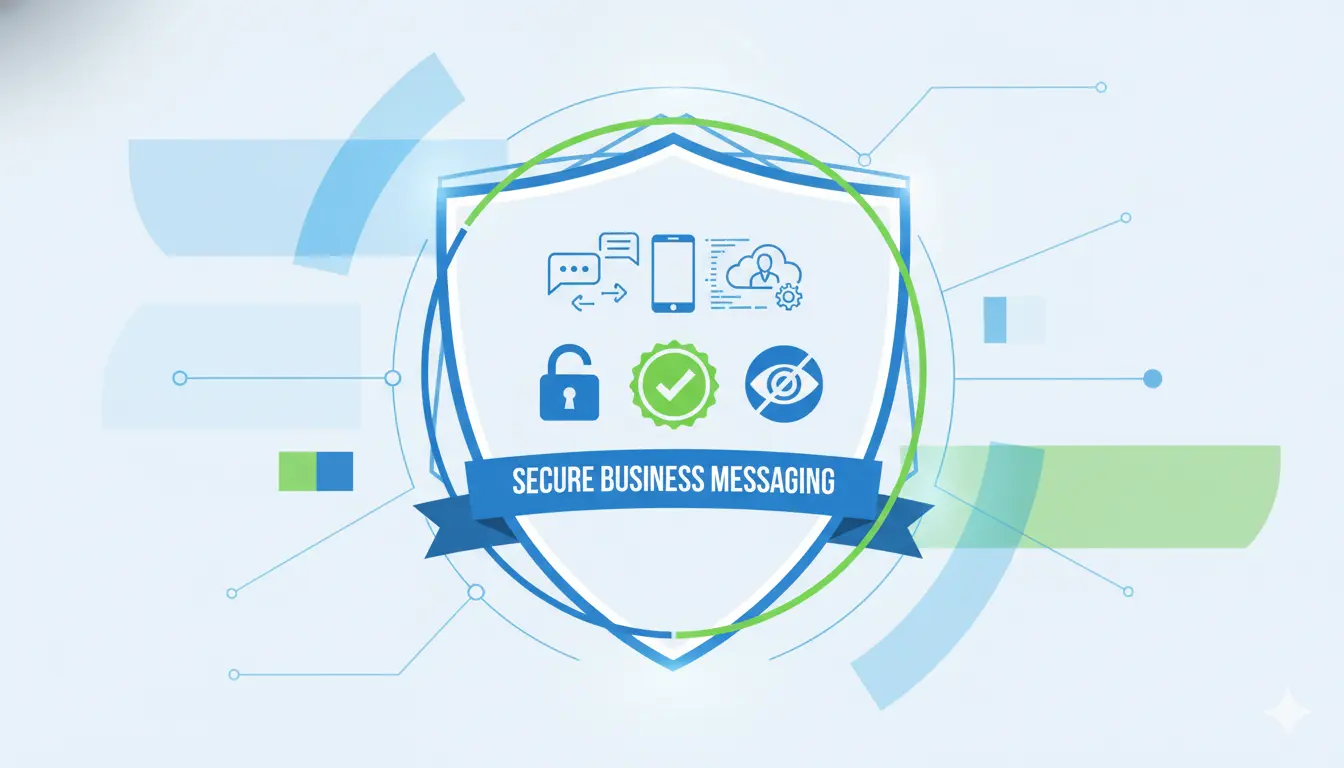
Think of data protection as a comprehensive shield that covers every touchpoint where customer data interacts with your SMS infrastructure.
Why Data Protection Matters in SMS Services
1. Legal and Financial Consequences
Non-compliance with data protection regulations can result in severe penalties. Under GDPR, violations can lead to fines up to €20 million or 4% of annual global turnover, whichever is higher. India's DPDP Act also imposes substantial penalties for data breaches and non-compliance.
2. Customer Trust and Brand Reputation
When customers share their phone numbers and consent to receive messages, they're placing trust in your business. A single data breach can destroy years of reputation-building and result in permanent customer loss.
3. Competitive Advantage
In an era where data privacy concerns are rising, businesses that demonstrate strong data protection practices gain a significant competitive edge. Customers increasingly choose brands they trust with their personal information.
4. Operational Continuity
Data breaches can disrupt business operations, require costly remediation efforts, and divert resources from growth activities. Proactive data protection prevents these disruptions.
5. Ethical Responsibility
Beyond legal requirements, businesses have an ethical obligation to protect customer data. This responsibility extends to every message sent, every number stored, and every interaction recorded.
Related Resource: Learn about top data protection risks in business messaging and how to prevent them
What Data Needs Protection in SMS Services?
Understanding what data requires protection is the first step toward implementing effective security measures.
Personal Identifiable Information (PII)
Phone Numbers: The most obvious but often underestimated data point. Phone numbers can reveal location, identity, and communication patterns.
Names and Personal Details: Customer names, addresses, email addresses, and demographic information linked to phone numbers.
User IDs and Account Information: Internal identifiers that connect phone numbers to customer accounts and purchase history.
Sensitive Message Content
One-Time Passwords (OTPs): Authentication codes that provide direct access to customer accounts if intercepted.
Transaction Details: Payment confirmations, account balances, and financial information sent via transactional SMS.
Personal Communications: Appointment reminders, delivery updates, and other messages containing personal details.
Metadata and Usage Information
Message Logs: Records of when messages were sent, delivered, and read.
Engagement Data: Opt-in dates, opt-out requests, and interaction history.
Device and Location Data: Information about the devices and locations associated with phone numbers.
Consent Records
Opt-in Documentation: Proof of when and how customers consented to receive messages.
Preference Settings: Customer choices regarding message frequency, types, and timing.
Opt-out Requests: Records of customers who've withdrawn consent.
Every piece of this data requires specific protection measures tailored to its sensitivity level and regulatory requirements.
Related Resource: Explore our bulk SMS service with built-in data protection features
Key Data Protection Principles for SMS Services
1. Data Minimization
Collect only the information necessary for your SMS communication purposes. If you only need a phone number to send OTPs, don't request additional personal details.
Practical Application:
- Avoid storing message content longer than necessary
- Delete inactive subscriber records after defined periods
- Remove unnecessary fields from customer databases
2. Purpose Limitation
Use customer data solely for the purposes they consented to. Phone numbers collected for transaction alerts shouldn't be used for promotional campaigns without separate consent.
Practical Application:
- Maintain separate databases for different message types
- Document the purpose for each data collection
- Obtain fresh consent when purposes change
3. Transparency and Accountability
Customers should know what data you collect, how you use it, and who you share it with. Maintain clear privacy policies and data processing records.
Practical Application:
- Publish accessible privacy policies
- Provide easy-to-understand consent forms
- Maintain audit trails of data processing activities
4. Security and Confidentiality
Implement technical and organizational measures to protect data from unauthorized access, breaches, and misuse.
Practical Application:
- Encrypt data both in transit and at rest
- Implement role-based access controls
- Conduct regular security audits
5. Individual Rights Respect
Honor customer rights to access, correct, delete, and port their data as mandated by regulations.
Practical Application:
- Create processes for data access requests
- Enable self-service preference management
- Respond to deletion requests promptly
Related Resource: Understand DLT compliance requirements for SMS in India
How SMS Data Protection Works in Practice
The SMS Journey: A Data Protection Perspective
Step 1: Data Collection When a customer opts in to receive SMS, their phone number enters your system. This is where data protection begins—with secure storage, proper consent documentation, and clear purpose definition.
Step 2: Data Storage Customer information sits in databases that must be encrypted, access-controlled, and regularly backed up. Only authorized personnel should have access, and all access should be logged.
Step 3: Message Preparation When crafting messages, sensitive information should be handled carefully. OTPs should be randomly generated, not derived from personal data. Transaction details should be formatted to minimize exposure.
Step 4: Transmission Messages travel through telecommunications networks via SMS gateway providers. This stage requires encryption, secure API connections, and trusted vendor partnerships.
Step 5: Delivery and Logging Delivery receipts and message logs contain valuable data that must be protected. These logs should be encrypted and automatically purged after retention periods expire.
Step 6: Opt-Out Management When customers opt out, their requests must be processed immediately, their data removed from active campaigns, and their preferences respected permanently.
Related Resource: Learn about our OTP SMS service with enhanced security features
Essential Data Protection Measures for SMS Services
Technical Safeguards
Encryption Protocols
- SSL/TLS for data in transit
- AES-256 encryption for data at rest
- End-to-end encryption for highly sensitive messages
Access Controls
- Multi-factor authentication for system access
- Role-based permissions limiting data exposure
- IP whitelisting for API access
Security Monitoring
- Real-time threat detection systems
- Automated anomaly alerts
- Regular penetration testing
Organizational Measures
Staff Training Regular training on data protection policies, security awareness, and incident response procedures.
Data Processing Agreements Written contracts with SMS gateway providers defining security responsibilities and compliance obligations.
Incident Response Plans Documented procedures for detecting, responding to, and reporting data breaches.
Privacy Impact Assessments Regular evaluations of how SMS operations affect customer privacy.
Compliance Frameworks
Regulatory Adherence
- India's DPDP Act compliance
- GDPR compliance for European customers
- Industry-specific regulations (HIPAA for healthcare, PCI DSS for payments)
Industry Standards
- ISO 27001 information security management
- SOC 2 compliance for service providers
- Telecom regulatory authority guidelines
Related Resource: Compare secure SMS gateway providers based on security certifications
Data Protection Laws Governing SMS Services
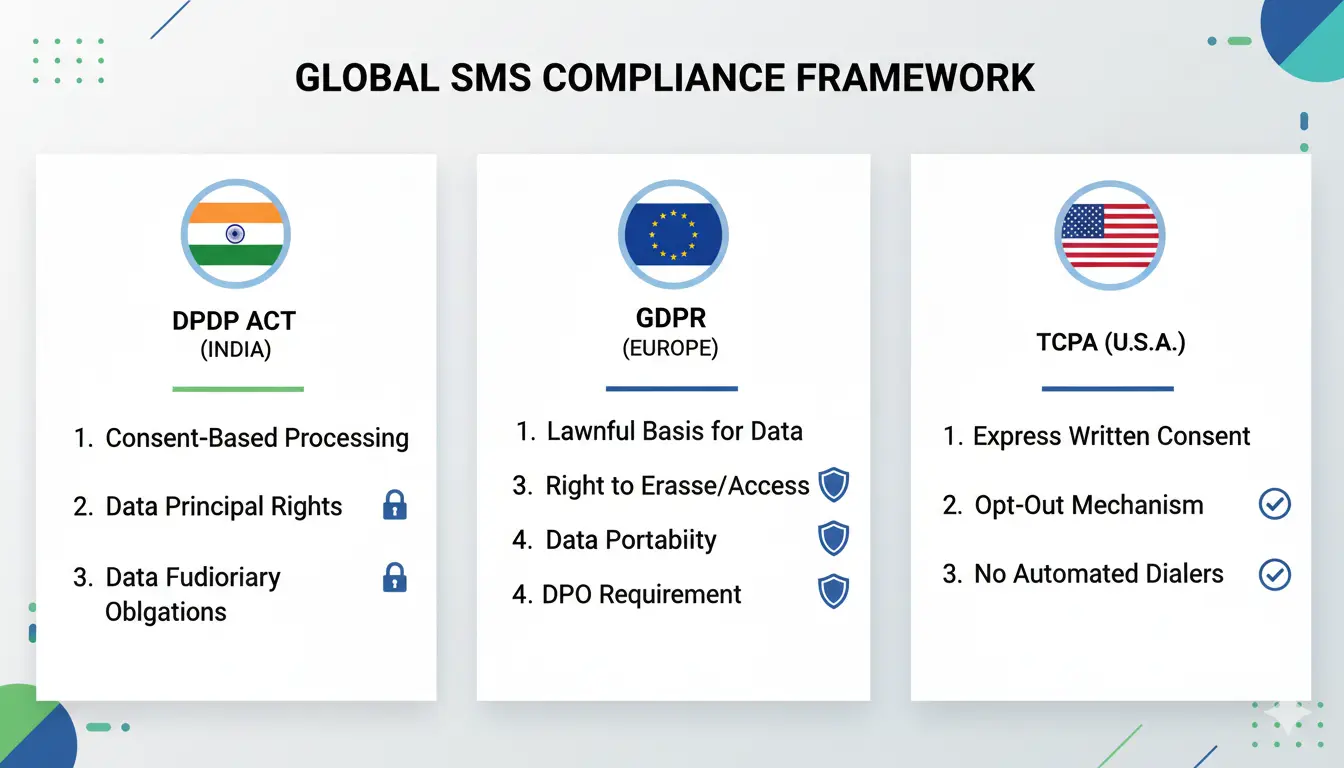
India: Digital Personal Data Protection Act (DPDP)
The DPDP Act mandates explicit consent for data collection, provides individuals with rights over their data, and requires organizations to implement reasonable security safeguards.
Key Requirements:
- Clear consent mechanisms before sending SMS
- Data processing limited to specified purposes
- Individual rights to access and delete data
- Mandatory breach notifications
- Cross-border transfer restrictions
European Union: GDPR
For businesses serving European customers, GDPR compliance is mandatory regardless of where the business is located.
Key Requirements:
- Lawful basis for processing (usually consent)
- Right to erasure and data portability
- Privacy by design and default
- Data protection impact assessments
- Appointment of Data Protection Officers (for large-scale operations)
Other Regulations
TCPA (USA): Requires prior express written consent for marketing messages and automatic telephone dialing systems.
PECR (UK): Regulates electronic marketing communications and requires opt-in consent.
Telecom Commercial Communications Customer Preference Regulations (India): Governs commercial SMS and DLT registration requirements.
Related Resource: Read our guide on GDPR compliance for SMS marketing
Choosing a Data Protection-Compliant SMS Provider
Your SMS gateway provider plays a critical role in data protection. Here's what to look for:
Security Certifications
- ISO 27001 (Information Security Management)
- SOC 2 Type II compliance
- Industry-specific certifications
Data Processing Agreements
Clear contracts defining:
- Data ownership and usage rights
- Security responsibilities
- Breach notification procedures
- Data deletion protocols
Infrastructure Security
- Data center certifications
- Redundancy and backup systems
- Network security measures
- Regular security audits
Transparency and Support
- Clear privacy policies
- Responsive security team
- Regular compliance updates
- Incident response capabilities
Track Record
- Years in operation
- Customer references
- No history of major breaches
- Transparent breach disclosure policies
At SMSGatewayHub, we maintain the highest security standards with ISO 27001 certification, GDPR compliance, and comprehensive data processing agreements with all clients.
Related Resource: Explore our transactional SMS API with enterprise-grade security
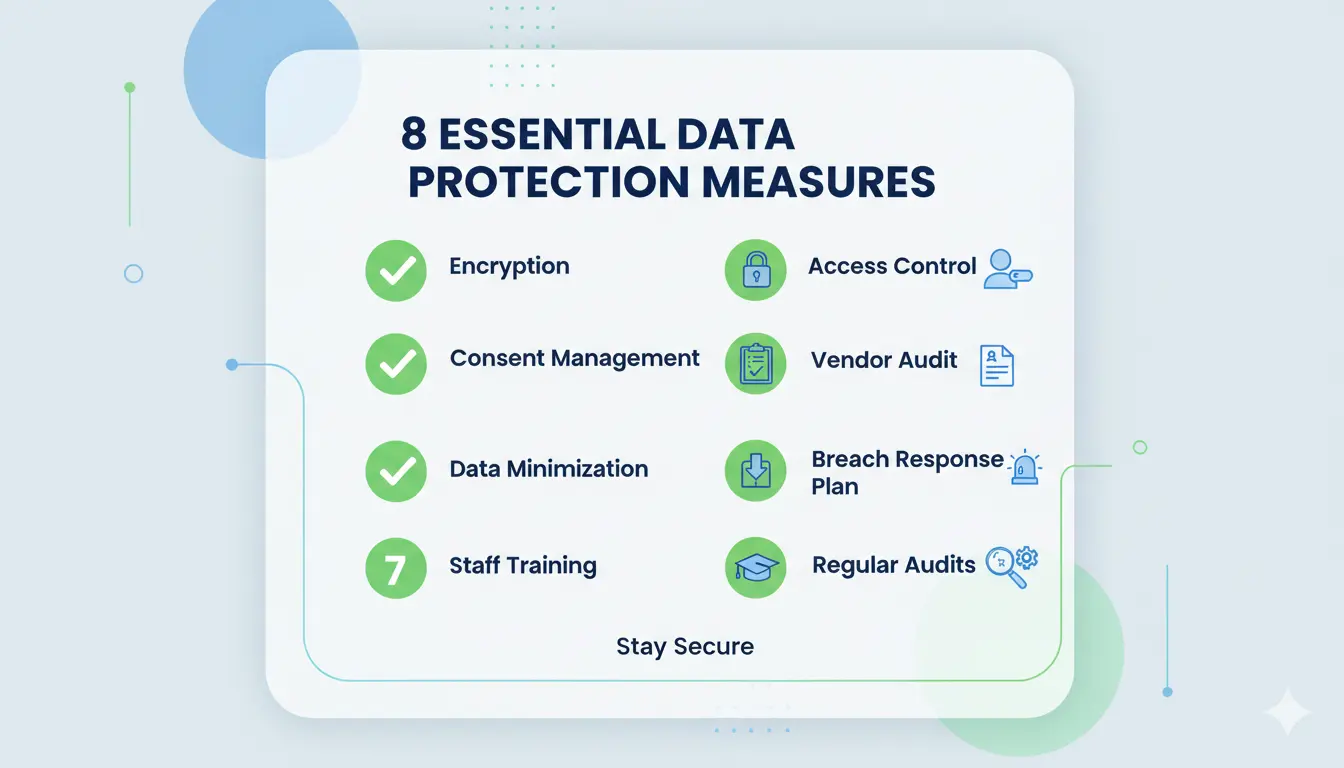
Best Practices for Businesses Using SMS Services
1. Implement Double Opt-In
Require customers to confirm their subscription through a verification SMS before adding them to your messaging lists.
2. Provide Clear Privacy Notices
Explain what data you collect, how you use it, and who you share it with in simple, accessible language.
3. Honor Opt-Outs Immediately
Process unsubscribe requests within 24 hours and maintain do-not-contact lists permanently.
4. Minimize Data Retention
Delete message logs and customer data that's no longer needed for business or legal purposes.
5. Encrypt Sensitive Information
Never store or transmit sensitive data like passwords or full financial details via SMS. Use OTPs for authentication instead.
6. Regular Security Audits
Conduct quarterly reviews of your SMS data protection practices, vendor compliance, and security measures.
7. Employee Access Management
Limit access to customer data based on job requirements and maintain detailed access logs.
8. Vendor Due Diligence
Regularly assess your SMS provider's security practices, certifications, and compliance status.
Related Resource: Download our SMS security checklist for comprehensive implementation guidance
Common Data Protection Mistakes to Avoid
1. Assuming Compliance is One-Time
Data protection requires ongoing effort, not just initial setup. Regulations change, threats evolve, and practices must adapt.
2. Ignoring Third-Party Risks
Your security is only as strong as your weakest vendor. Don't assume SMS providers handle data securely without verification.
3. Over-Collecting Data
Collecting unnecessary information increases breach risk and compliance burden without adding business value.
4. Neglecting Consent Documentation
Without proper consent records, you can't prove compliance when authorities or customers question your practices.
5. Sending Sensitive Information Unencrypted
Plain-text SMS for highly sensitive data creates unnecessary risk. Use additional security layers for critical information.
6. Delayed Breach Response
Every minute counts during a data breach. Delayed response amplifies damage and regulatory consequences.
7. Inadequate Staff Training
Employees who don't understand data protection principles become the weakest link in your security chain.
The Future of Data Protection in SMS Services
As technology advances and regulations evolve, data protection in SMS services will become even more critical.
Emerging Trends
Enhanced Encryption Standards: Moving toward end-to-end encryption for all business messaging, not just sensitive content.
AI-Powered Threat Detection: Automated systems identifying unusual patterns and potential breaches in real-time.
Blockchain for Consent Management: Immutable records of customer consent and data processing activities.
Privacy-Preserving Analytics: Techniques allowing businesses to gain insights without accessing individual customer data.
Stricter Regulations: More countries adopting comprehensive data protection laws similar to GDPR and India's DPDP Act.
Integrated Compliance Tools: SMS platforms with built-in compliance management, automated consent handling, and regulatory reporting.
Businesses that stay ahead of these trends will be better positioned to maintain customer trust and regulatory compliance.
Conclusion
Data protection in SMS services isn't merely a checkbox exercise or regulatory burden—it's a fundamental business practice that protects your customers, your reputation, and your bottom line.
Every SMS you send carries an implicit promise: "We will protect your information." Breaking that promise has consequences that extend far beyond fines and legal issues. It affects customer loyalty, brand perception, and long-term business viability.
At SMSGatewayHub, we've built our platform on the principle that security and usability must go hand-in-hand. Our ISO 27001-certified infrastructure, comprehensive data processing agreements, and commitment to regulatory compliance ensure that your customer data remains protected at every stage of the messaging journey.
Whether you're sending bulk promotional SMS, critical OTP codes, or transactional alerts, data protection should never be an afterthought. It should be the foundation upon which your entire messaging strategy is built.
Ready to implement data protection best practices in your SMS operations? Start by assessing your current practices, choosing compliant service providers, and building a culture of privacy awareness within your organization.
Related Resource: Read about top data protection risks in business messaging to identify vulnerabilities in your current setup
Frequently Asked Questions (FAQ Schema)
What is data protection in SMS services?
Data protection in SMS services refers to the measures and practices used to safeguard customer information—including phone numbers, message content, and personal data—throughout the SMS lifecycle, from collection and storage to transmission and deletion, while ensuring compliance with privacy regulations.
Why is data protection important for SMS services?
Data protection is crucial because it prevents data breaches, ensures regulatory compliance (avoiding fines), maintains customer trust, protects brand reputation, and fulfills ethical responsibilities to customers who share their personal information.
What customer data needs protection in SMS services?
Protected data includes phone numbers, names, email addresses, OTP codes, transaction details, message logs, opt-in records, consent documentation, engagement data, and any personally identifiable information (PII) associated with SMS communications.
What are the main data protection laws for SMS in India?
The primary law is India's Digital Personal Data Protection Act (DPDP), which requires explicit consent, data minimization, security safeguards, and individual rights protection. Additionally, Telecom Commercial Communications Customer Preference Regulations govern commercial SMS and DLT registration.
How does GDPR apply to SMS services?
GDPR applies to any business sending SMS to customers in the European Union, regardless of where the business is located. It requires lawful basis (usually consent) for processing, data protection by design, breach notifications within 72 hours, and respect for individual rights including erasure and portability.
What is DLT registration for SMS in India?
Distributed Ledger Technology (DLT) registration is mandatory for all businesses sending commercial or promotional SMS in India. It creates a transparent, secure system for managing SMS templates, sender IDs, and consent records, helping prevent spam and ensuring compliance with TRAI regulations.
How should businesses protect OTP messages?
OTP protection requires encryption during transmission, short expiration times (3-5 minutes), rate limiting to prevent spam attacks, secure storage of generation algorithms, and customer education about never sharing OTPs with anyone, including support staff.
What security features should an SMS gateway provider have?
Look for ISO 27001 certification, SOC 2 compliance, data encryption in transit and at rest, secure API access with authentication, regular security audits, comprehensive data processing agreements, GDPR/DPDP compliance, and transparent breach notification procedures.
How long should businesses retain SMS data?
Retention periods depend on legal requirements and business needs. Generally, message logs should be kept only as long as necessary for operational purposes (typically 30-90 days), while consent records should be retained for proof of compliance. Always follow the data minimization principle.
What should businesses do in case of an SMS data breach?
Immediate steps include containing the breach, assessing the scope and impact, notifying affected customers, reporting to relevant authorities (within 72 hours for GDPR), documenting the incident, implementing remediation measures, and reviewing security practices to prevent recurrence.
Can businesses use customer phone numbers for different purposes?
No, businesses must use phone numbers only for purposes customers explicitly consented to. Using numbers collected for transactional SMS for marketing requires separate consent. This is called purpose limitation and is a core data protection principle.
What is the difference between opt-in and opt-out in SMS?
Opt-in requires customers to actively agree to receive messages before you send them (consent-based, required by most regulations). Opt-out assumes permission unless customers request removal (presumed consent, generally not compliant with modern privacy laws). Always use opt-in for compliance.