The Efficiency Challenge in Indian Logistics
Indian logistics companies face intense pressure to deliver faster and more efficiently while managing rising operational costs. With fuel prices fluctuating between ₹95-105 per litre and increasing competition from players like Delhivery, Ecom Express, and Blue Dart, maintaining healthy profit margins requires constant efficiency improvements.
The challenges are uniquely complex in India. Traffic congestion in metros like Mumbai, Delhi, and Bangalore adds 30-45 minutes to average delivery times. Monsoon season from June to September creates delivery delays. Address verification remains problematic in tier-2 and tier-3 cities where formal addressing systems are still developing. Failed delivery rates in India average 15-18%, significantly higher than global standards of 8-10%.
Research across Indian logistics operations reveals that communication inefficiencies represent the largest untapped opportunity for improvement. Failed deliveries due to customer unavailability, excessive customer service calls asking "mera package kahan hai", drivers waiting for dispatch instructions, and delayed problem resolution all stem from communication gaps that bulk SMS technology can bridge effectively.
Leading Indian logistics companies implementing comprehensive SMS strategies report efficiency improvements of 35-45% across key metrics. This article explores exactly how SMS delivers these results and provides actionable implementation strategies for Indian operations.
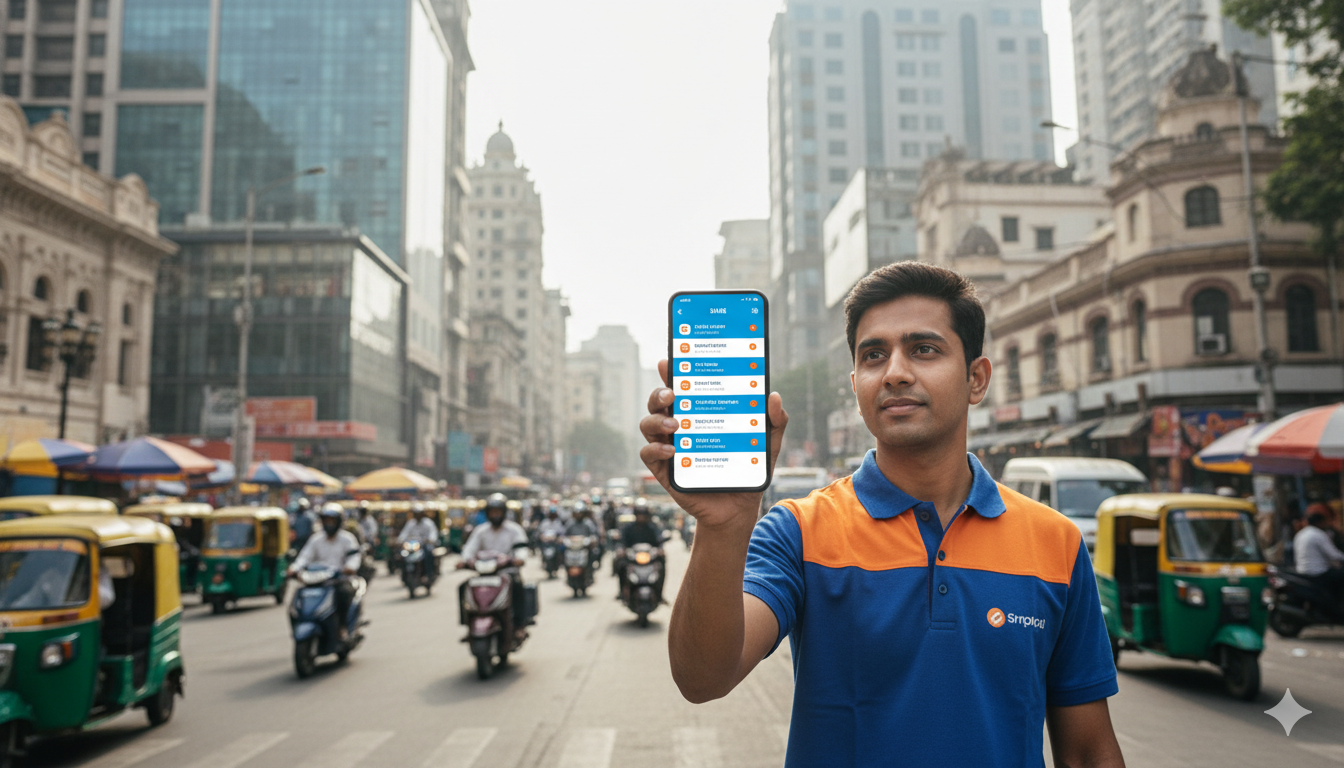


How SMS Reduces Failed Deliveries in India
Failed deliveries represent the single largest efficiency drain in Indian logistics. Each failed delivery costs ₹1,200-1,800 when accounting for fuel, driver time, vehicle depreciation, and administrative overhead. In tier-1 cities, this cost reaches ₹2,000-2,500 due to higher operational expenses.
The primary reasons for failed deliveries in India include customer unavailability at homes or offices, incorrect or incomplete addresses (especially in areas without proper addressing systems), businesses closed during delivery attempts, residential societies requiring prior authorization, and language barriers between delivery personnel and customers.
Pre-delivery SMS notifications sent 30-60 minutes before arrival dramatically reduce unavailability-related failures. When customers receive messages in their preferred language—Hindi, English, Tamil, Telugu, or other regional languages—they can arrange to be available. This simple intervention reduces failed deliveries by 60-70%.
For a logistics company handling 5,000 daily deliveries in Delhi NCR, preventing 600 failed delivery attempts saves ₹9-15 lakh daily or ₹2.7-4.5 crore monthly. Even with SMS costs of ₹0.20 per message and 8 messages per delivery, communication expenses of ₹8,000 daily deliver extraordinary ROI exceeding 1,000%.
Address verification through SMS enables customers to confirm or correct delivery addresses before drivers waste time reaching wrong locations. Automated messages sent at dispatch include: "आपके पार्सल को 123 मेन स्ट्रीट, अपार्टमेंट 5B पर डिलीवर किया जाएगा। कृपया CONFIRM या CHANGE भेजें।" This proactive verification catches address errors before failed attempts occur.
Two-way SMS enables real-time problem solving when issues arise. Drivers encountering gated society entry problems can message customers immediately: "Driver aapke society gate par hai. Security को resident authorization chahiye." This instant communication resolves issues in minutes rather than forcing failed delivery and rescheduling.
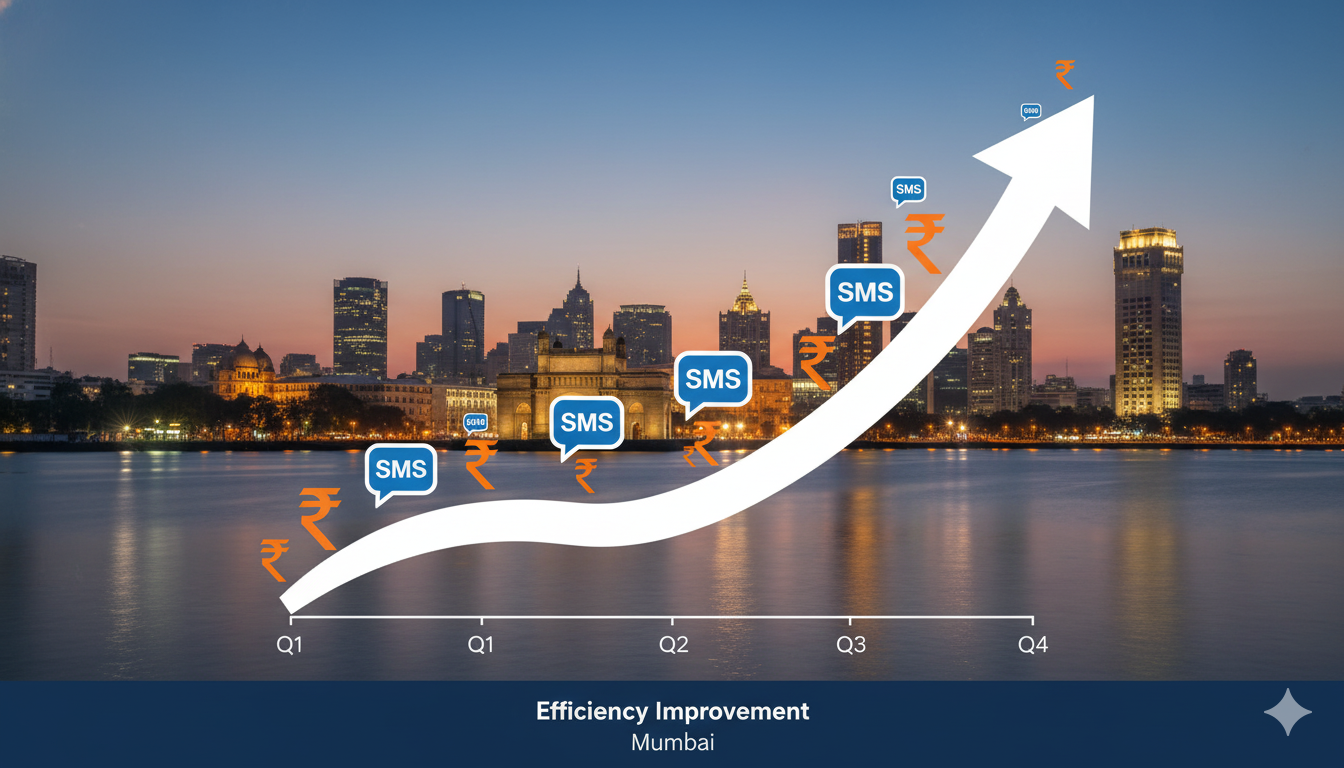
Improving Driver Productivity Through SMS Coordination
Driver efficiency directly impacts overall logistics performance. In Indian operations, drivers face unique challenges including chaotic traffic, lack of proper addressing in many areas, language barriers across states, and security protocols at residential societies and office complexes.
Traditional driver communication relies on phone calls consuming significant time and airtime costs. SMS provides reliable, universal connectivity regardless of location or network conditions—critical in areas with poor data coverage common in tier-2/3 cities.
Standardized SMS protocols streamline communication through simple, consistent formats. Rather than lengthy phone conversations, drivers receive structured information via SMS: delivery addresses with landmarks, package details, customer contact information, special instructions like "3rd floor, no lift", and access codes for gated societies.
Status update automation eliminates time-consuming manual reporting. Drivers send simple confirmation codes after completing deliveries: "D123" confirms delivery completion for package 123, automatically updating systems and triggering customer notifications. This takes seconds compared to 2-3 minutes for phone call reporting.
Route optimization improves through real-time SMS coordination between drivers and dispatch centers. When traffic delays impact delivery sequences, dispatchers send route adjustments rerouting around congestion. This dynamic optimization prevents cascading delays during peak traffic hours (9-11 AM and 5-8 PM in metros).
Customer communication via SMS creates efficiency through delivery flexibility. Customers can respond with time preferences: "कृपया दोपहर 2 बजे के बाद डिलीवर करें" or "कल सुबह ज्यादा बेहतर होगा।" This input allows dispatchers to resequence routes, grouping deliveries by customer availability windows.
Studies show SMS coordination increases average deliveries per driver from 45 to 63 per day—a 40% productivity improvement. For a 50-driver fleet with average driver costs of ₹35,000 monthly, this productivity gain delivers value equivalent to 20 additional drivers worth ₹70 lakh monthly or ₹8.4 crore annually in avoided hiring costs.
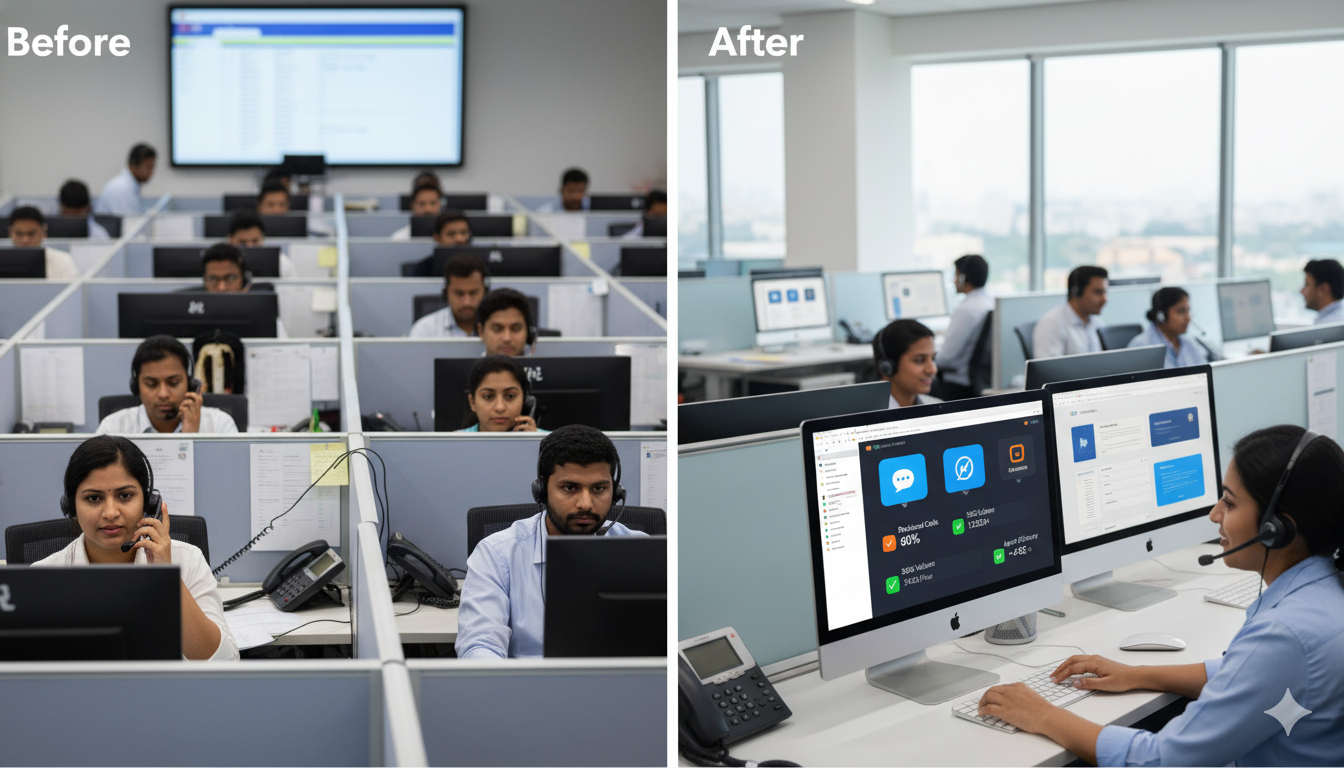
Reducing Customer Service Costs
Customer service operations consume disproportionate resources in Indian logistics. Traditional operations dedicate substantial staff to answering repetitive questions in multiple languages: "Mera package kahan hai?" "Kab tak aayega?" These high-volume, low-value interactions strain budgets while delivering poor customer experiences.
The challenge multiplies in India's multi-lingual market. Customer service centers need representatives fluent in Hindi, English, Tamil, Telugu, Kannada, Bengali, Marathi, Gujarati, and more regional languages. Each additional language increases staffing costs and training complexity.
SMS communication transforms customer service economics through proactive information delivery. When customers receive comprehensive tracking updates via SMS in their preferred language throughout delivery journeys, they rarely need to contact support. Studies show proactive SMS tracking in regional languages reduces status inquiries by 65-75%.
Self-service capabilities enabled through two-way SMS empower customers to resolve common needs independently. Need to reschedule delivery? Reply RESCHEDULE to the notification SMS and follow automated prompts. Want to add delivery instructions? Send SMS with specific requirements that automatically attach to delivery records. This handles 40-50% of customer service requests without human agent involvement.
If proactive SMS reduces customer service inquiries by 70% and average inquiry costs ₹400-650 in agent time and system costs, a logistics company handling 10,000 daily deliveries saves ₹28,000-45,500 daily through reduced service demand. This translates to ₹8.4-13.7 lakh monthly or ₹1-1.6 crore annually—savings that often exceed total SMS implementation costs by 5-8X.
Multi-lingual customer service staff commanding ₹25,000-40,000 monthly can be redeployed to higher-value activities like relationship management with enterprise clients, merchant onboarding, or quality assurance initiatives. This strategic reallocation improves both operational efficiency and service quality.
Discover more-How Bulk SMS Services Are Transforming the Transport Industry in 2026
Optimizing Fleet and Fuel Efficiency
Fleet utilization and fuel consumption represent major cost centers in Indian logistics. With diesel prices at ₹90-100 per litre in most cities, even small fuel savings create meaningful impact on profitability.
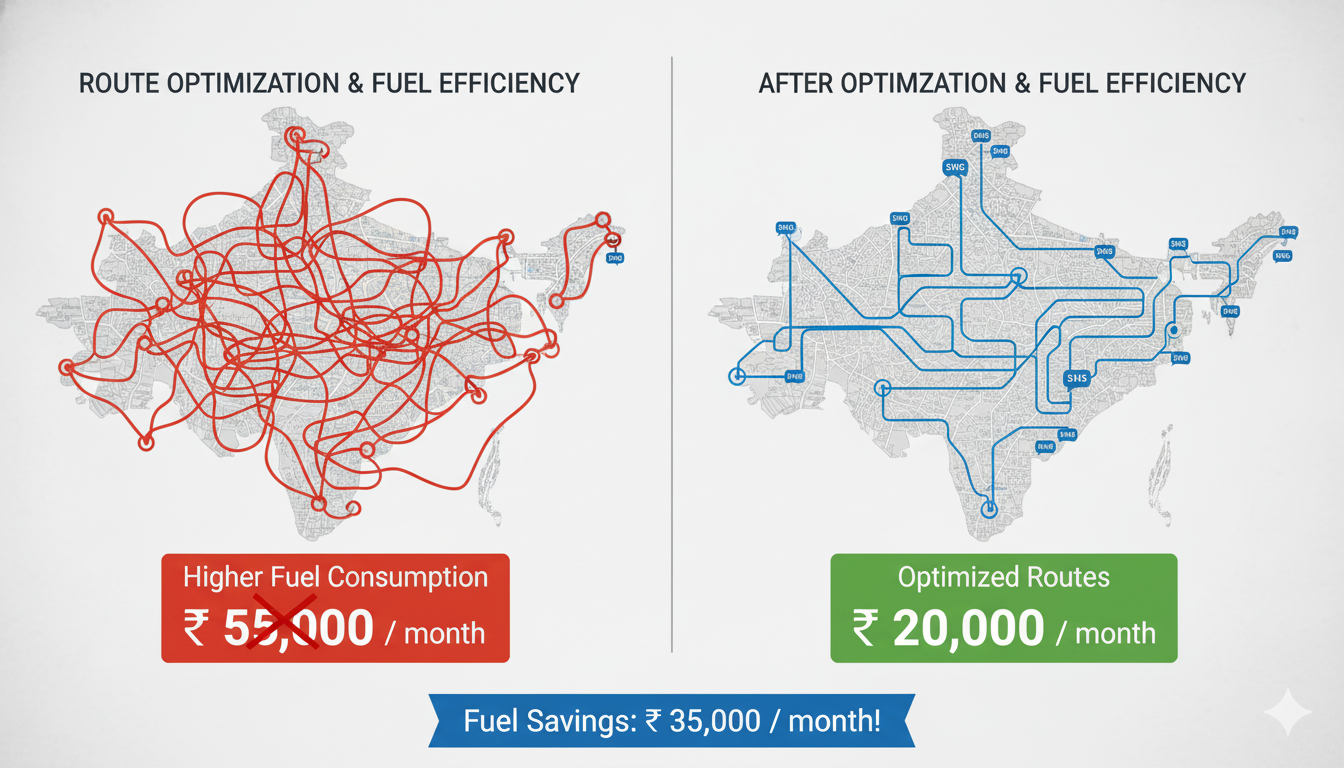
SMS communication optimizes fuel consumption by reducing failed delivery attempts (each wasting 8-12 km on average), enabling better route planning with customer availability information, minimizing time spent in communication-related delays, and supporting pickup coordination that reduces empty return trips.
For operations handling 5,000 daily deliveries, preventing 600 failed delivery attempts saves 6,000-7,200 km daily, meaning 750-900 litres saved worth ₹71,250-85,500 daily at ₹95/litre. Combined with 10% route optimization through better coordination, total fuel savings reach ₹75,000-90,000 daily or ₹22.7-27 lakh monthly or ₹2.7-3.2 crore annually.
Vehicle utilization improves through SMS coordination of pickup and delivery sequences. When customers schedule return pickups via SMS (common given 20-30% return rates in Indian e-commerce), dispatchers can integrate these into existing delivery routes. A driver heading to Malad can pick up returns from Goregaon and Kandivali on the same route, maximizing utilization.
Improving vehicle utilization from 65% to 82% means handling more volume with fewer vehicles. For fleets where each delivery tempo costs ₹8-12 lakh to purchase plus ₹2,500-3,500 daily operating costs, reducing requirements by 5 vehicles saves ₹40-60 lakh in avoided purchases plus ongoing operating cost savings.
Comprehensive Cost-Benefit Analysis for Indian Operations
Understanding the complete financial impact requires analyzing both direct savings and indirect business value in Indian rupee terms.
Annual Investment for Mid-Size Operation (5,000 daily deliveries):
- SMS charges: ₹8,000 daily × 365 = ₹29.2 lakh
- Platform fees: ₹3-5 lakh annually
- Implementation: ₹8-12 lakh (one-time)
- Training: ₹2-3 lakh (one-time)
- Total Year-1 Investment: ₹42-49 lakh
Annual Benefits:
- Failed delivery savings: ₹32-40 crore (preventing 600 daily failed deliveries at ₹1,500-1,800 each)
- Customer service reduction: ₹1-1.6 crore (70% reduction in inquiries)
- Driver productivity gains: ₹8-10 crore (40% improvement equals 20 additional drivers)
- Fuel savings: ₹2.7-3.2 crore (preventing failed deliveries and route optimization)
- Vehicle optimization: ₹2-3 crore (amortized savings from reduced fleet requirements)
- Total Annual Benefits: ₹45.7-57.8 crore
Net Annual Benefit: ₹45.2-57.3 crore Year-1 ROI: 1,035-1,267% Payback Period: 2-3 weeks
These calculations demonstrate that SMS communication delivers extraordinary returns on investment, making it one of the highest-ROI technologies available to Indian logistics companies.
Learn more here -Why Every Logistics & Courier Company Needs a Bulk SMS Service
Implementation Roadmap for Indian Market
Achieving 40% efficiency improvements requires strategic implementation following proven methodologies adapted to Indian conditions.
Phase 1 (Weeks 1-3): Failed Delivery Prevention Focus exclusively on pre-delivery notifications in Hindi, English, and 2-3 regional languages. Start with major cities like Mumbai, Delhi, and Bangalore. This delivers 15-20% reduction in failed deliveries within 2-3 weeks, providing quick wins and immediate ROI of ₹15-25 lakh monthly.
Phase 2 (Weeks 4-7): Comprehensive Tracking Expand to full tracking notifications throughout delivery journeys: dispatch confirmations, in-transit updates, out-for-delivery alerts, and delivery completions. This reduces customer service inquiries 50-60%, delivering ₹20-35 lakh monthly savings.
Phase 3 (Weeks 8-12): Two-Way Communication Implement self-service capabilities through two-way SMS supporting Hindi and English responses plus Hinglish variations. Expect 30-40% additional reduction in customer service calls and 8-12% improvement in first-attempt delivery success.
Phase 4 (Weeks 13-18): Driver Coordination Extend SMS to driver coordination with simple confirmation codes, exception reporting, and route guidance. Requires driver training accommodating varying literacy levels and language preferences. Delivers 12-18% improvement in deliveries per driver per day.
Phase 5 (Weeks 19+): Analytics & Optimization Implement analytics programs tracking performance by city, route, and customer segment. A/B testing frameworks enable continuous optimization. This phase establishes ongoing improvement mechanisms compounding efficiency gains over time.
Throughout implementation, maintain focus on efficiency metrics rather than communication metrics alone. Regular monthly reviews connecting SMS investments with P&L improvements justify continued optimization.
Read the full story-Bulk SMS API for Logistics: Fleet & Delivery Tracking 2025
Real-World Success: Indian Case Study
A Pune-based courier company handling 3,500 daily deliveries across Maharashtra and Gujarat struggled with 16% failed delivery rates and high customer service costs of ₹75 lakh monthly with a 15-person team handling queries in Marathi, Hindi, and Gujarati.
After implementing comprehensive SMS communication including pre-delivery notifications in regional languages, tracking updates, and two-way customer interaction, results were dramatic:
- Failed delivery rates dropped to 5.8% (64% improvement)
- Customer service calls decreased 71%
- 6 representatives redeployed to merchant relationships and business development
- Monthly savings: ₹42 lakh from reduced failed deliveries + ₹28 lakh from customer service efficiency
- Monthly revenue increase: ₹15 lakh from improved merchant satisfaction
- Total monthly benefit: ₹85 lakh against SMS costs of ₹6.8 lakh
- Monthly ROI: 1,150%
Within 6 months, efficiency improvements enabled 31% volume growth without proportional staffing increases, demonstrating scalability advantages of SMS-driven operations.
Critical success factors included strong management commitment, comprehensive regional language support respecting local preferences, intensive driver training with hands-on practice, and regular performance reviews celebrating wins.
Discover the full story -Which is the best SMS service provider in India?
Overcoming Common Implementation Challenges
Multi-Lingual Complexity: Start with Hindi and English covering 60-70% of market, then add regional languages progressively. Partner with SMS providers offering professional translation services. Budget ₹3-5 lakh for initial translations across 8-10 languages.
System Integration: Work with SMS providers like SMSGatewayHub.com offering pre-built connectors for common Indian logistics platforms. Use middleware solutions for legacy systems. Allocate 2-4 weeks for integration with technical support.
Driver Adoption: Design simple SMS protocols assuming basic literacy—numeric codes like "D123" work better than complex text. Provide hands-on training with practice sessions. Create multilingual visual guides. Establish peer mentoring. Allocate 3-4 weeks for training across driver fleet.
Regulatory Compliance: Complete TRAI DLT registration obtaining Principal Entity ID and registering message templates—process takes 7-10 days with ₹5,000-10,000 costs. Obtain customer consent during order placement with clear value proposition.
Cost Concerns: Conduct comprehensive cost-benefit analysis showing 10-12X returns. Start with pilot in single city measuring actual ROI. Negotiate volume-based pricing reducing per-message costs 30-40% for high-volume operations.
You might also like -How to Choose the Right OTP Services for E-commerce Websites in India
Continuous Improvement for Long-Term Success
Initial efficiency gains represent just the beginning. Leading Indian logistics organizations establish continuous improvement programs compounding benefits over time.
Implement A/B testing frameworks comparing message variations—timing, language, personalization levels—identifying optimal approaches for different customer segments and cities. Quarterly testing cycles create 2-5% incremental improvements compounding across lakhs of deliveries.
Seasonal optimization adapts strategies for Indian festivals. Diwali season requires different messaging than normal periods. Monsoon season needs weather-related communication. Annual cycle analysis continuously improves seasonal handling.
Geographic customization respects regional diversity. Mumbai deliveries face different challenges than rural Maharashtra. Delhi NCR gated societies require different approaches than old Delhi markets. Location-specific optimization maximizes efficiency in each market.
Analytics correlate SMS communication with business outcomes measuring how notifications impact failed delivery rates, customer satisfaction scores, and operational costs. This data-driven approach identifies opportunities for ongoing refinement.
Recommended for you-What is the best bulk SMS service provider in India?
Conclusion: The Path to 40% Efficiency Improvement
Bulk SMS communication represents one of the highest-ROI investments available to Indian logistics companies. The combination of reduced failed deliveries, lower customer service costs, improved driver productivity, and better fuel efficiency delivers measurable gains of 35-45% across key efficiency metrics.
For Indian operations, SMS addresses uniquely local challenges: multi-lingual communication needs, address verification in areas without formal addressing, coordination through chaotic traffic, and seasonal volume management during festivals. These India-specific benefits make SMS even more valuable than in Western markets.
Implementation follows proven phases: start with failed delivery prevention delivering quick wins, expand to comprehensive tracking reducing customer service demand, implement two-way communication enabling self-service, extend to driver coordination unifying operations, and establish analytics-driven continuous improvement.
Financial analysis consistently demonstrates compelling returns. Cost savings from failed delivery prevention alone often justify total implementation costs within 2-3 weeks. Additional benefits from reduced customer service costs, improved productivity, and better resource utilization deliver ongoing returns exceeding communication costs by 10-12X.
The competitive landscape increasingly demands operational excellence. Customers expect transparency, reliability, and responsiveness that only efficient operations can deliver profitably. SMS communication infrastructure enables meeting rising expectations while maintaining cost structures supporting sustainable growth.
For logistics companies ready to boost delivery efficiency by 40%, partnering with proven SMS gateway providers like SMSGatewayHub.com ensures access to robust technology, multi-lingual capabilities, logistics-specific features, and implementation support tailored for Indian operations.
The question isn't whether SMS communication improves efficiency—evidence overwhelmingly confirms dramatic improvements. The real question is how quickly your organization will implement these efficiency-driving capabilities and begin realizing the competitive advantages they deliver in India's dynamic logistics market.
Suggested articles -SMS API Integration Guide: How to Add SMS Functionality to Your Application in 2025
Frequently Asked Questions (FAQs)
Q1: How quickly can Indian logistics companies see efficiency improvements after implementing SMS?
Ans: Initial efficiency gains appear within 2-4 weeks of implementing basic pre-delivery notifications, with failed delivery reductions of 15-20% common in the first month. Comprehensive efficiency improvements of 35-40% typically materialize over 3-6 months as full SMS programs become operational and optimized for Indian market conditions.
Q2: What SMS volume makes implementation cost-effective for Indian operations?
Ans: SMS delivers positive ROI at virtually any delivery volume. Even small operations with 100 daily deliveries save substantially more from prevented failed deliveries (₹1,200-1,800 each) than spent on SMS (₹0.20 per message). Larger operations benefit from volume pricing further improving ROI by 30-40%.
Q3: How does SMS work across India's multiple languages?
Ans: Professional SMS platforms support all major Indian languages including Hindi, English, Tamil, Telugu, Kannada, Bengali, Marathi, Gujarati, and Malayalam. Language selection happens automatically based on customer preferences or delivery location. Initial translation setup costs ₹3-5 lakh for 8-10 languages with ₹50,000-75,000 annual maintenance.
Q4: What about TRAI DLT compliance requirements?
Ans: TRAI DLT registration requires obtaining Principal Entity ID and registering message templates—process takes 7-10 days with ₹5,000-10,000 costs. Reputable SMS providers like SMSGatewayHub.com offer compliance support and template registration assistance ensuring full regulatory adherence.
Q5: How do efficiency improvements vary between metros and tier-2/3 cities?
Ans: Both benefit substantially, though through different mechanisms. Metro efficiency improves primarily through traffic coordination and gated society management. Tier-2/3 cities gain more from address verification and local language communication. Overall efficiency improvements average 35-45% for both when SMS addresses location-specific challenges.
Q6: Can SMS handle peak festival season volumes like Diwali?
Ans: Yes, SMS infrastructure scales automatically handling volume spikes during Diwali, year-end sales, and regional festivals. Many companies report handling 3-5X normal volumes during peak periods while maintaining efficiency within 5-10% of normal period performance through SMS automation preventing customer service overload.
SMSGATEWAYHUB TECHNOLOGIES PVT LTD (STPL)
Building 163-164 Sacchidanand Nagar
Kesar Baugh OLD RTO Road
Indore - Madhya Pradesh - India 452012
Sales: 18001021822
Support: +91-9907922122
Email: sales@smsgatewayhub.com