OTP SMS Service in India: What Providers Won't Tell You About Speed and Security
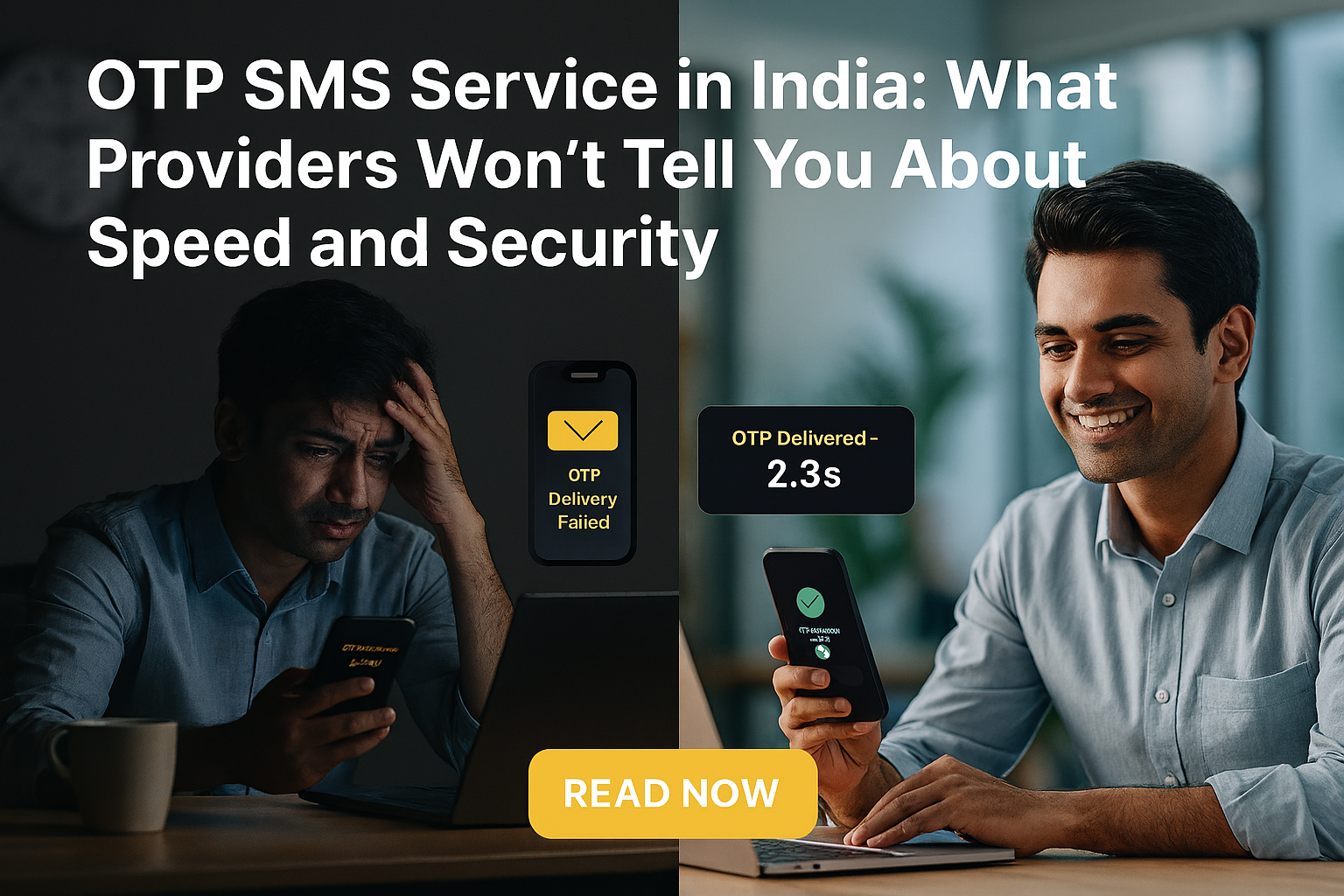
A fintech founder called me at 11 PM last Thursday. Their OTP delivery rate had dropped from 97% to 68% overnight. Users couldn't complete transactions. The support team was drowning in complaints. After checking their logs, I found something shocking—their "premium" OTP SMS provider was routing messages through three intermediaries before reaching customers.
That fifteen-rupee-per-thousand discount they'd negotiated? It was costing them ₹4 lakhs daily in failed transactions and abandoned sign-ups.
This happens more often than anyone admits. The OTP SMS service market in India runs on promises of instant delivery and rock-solid reliability. Yet most businesses discover the truth only after launch—when their authentication system becomes their biggest vulnerability instead of their security layer.

Why 3-Second Delivery Makes or Breaks Your Business
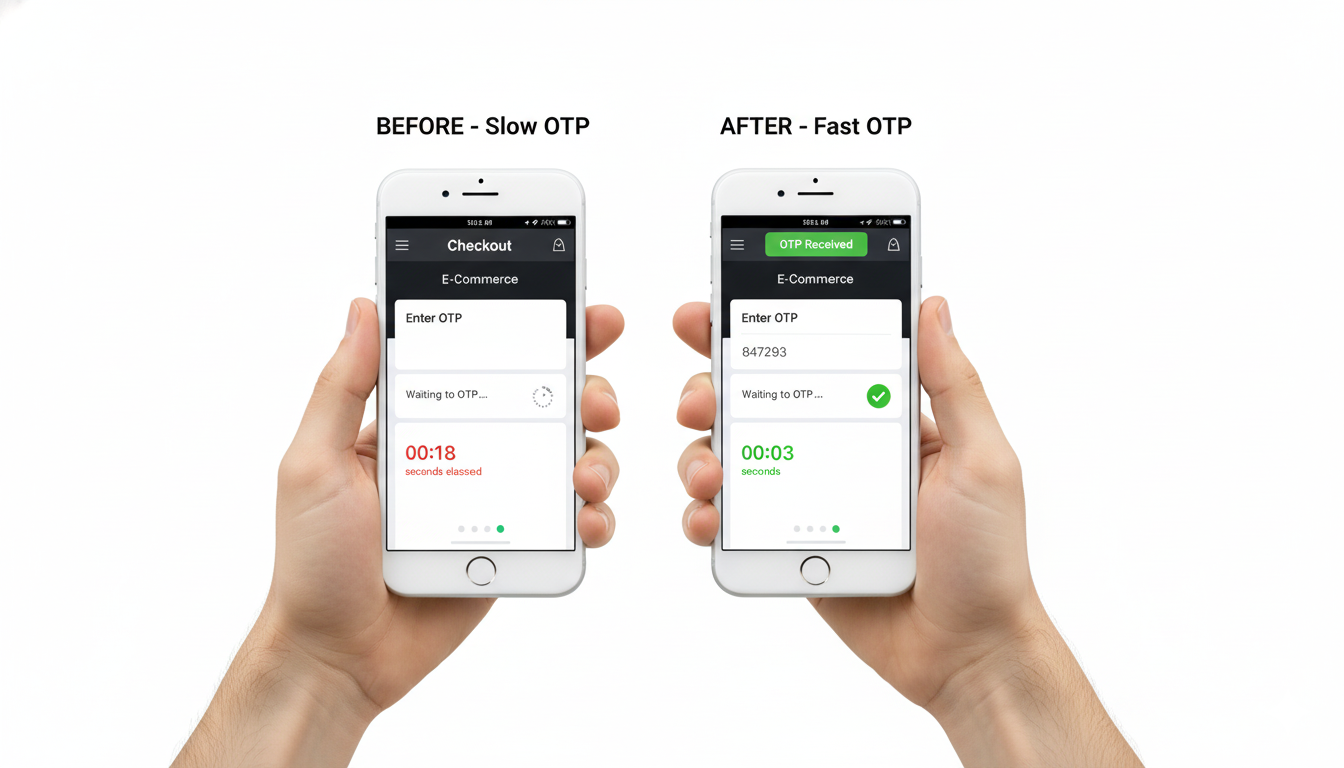
When someone enters their phone number on your platform and hits "Send OTP," they expect that code within five seconds maximum. Not ten seconds. Not fifteen. Five.
Research across payment platforms shows abandonment rates spike dramatically after the seven-second mark. Users refresh the page, click send again, or simply leave. Each extra second of delay costs you conversions—measurably and predictably.
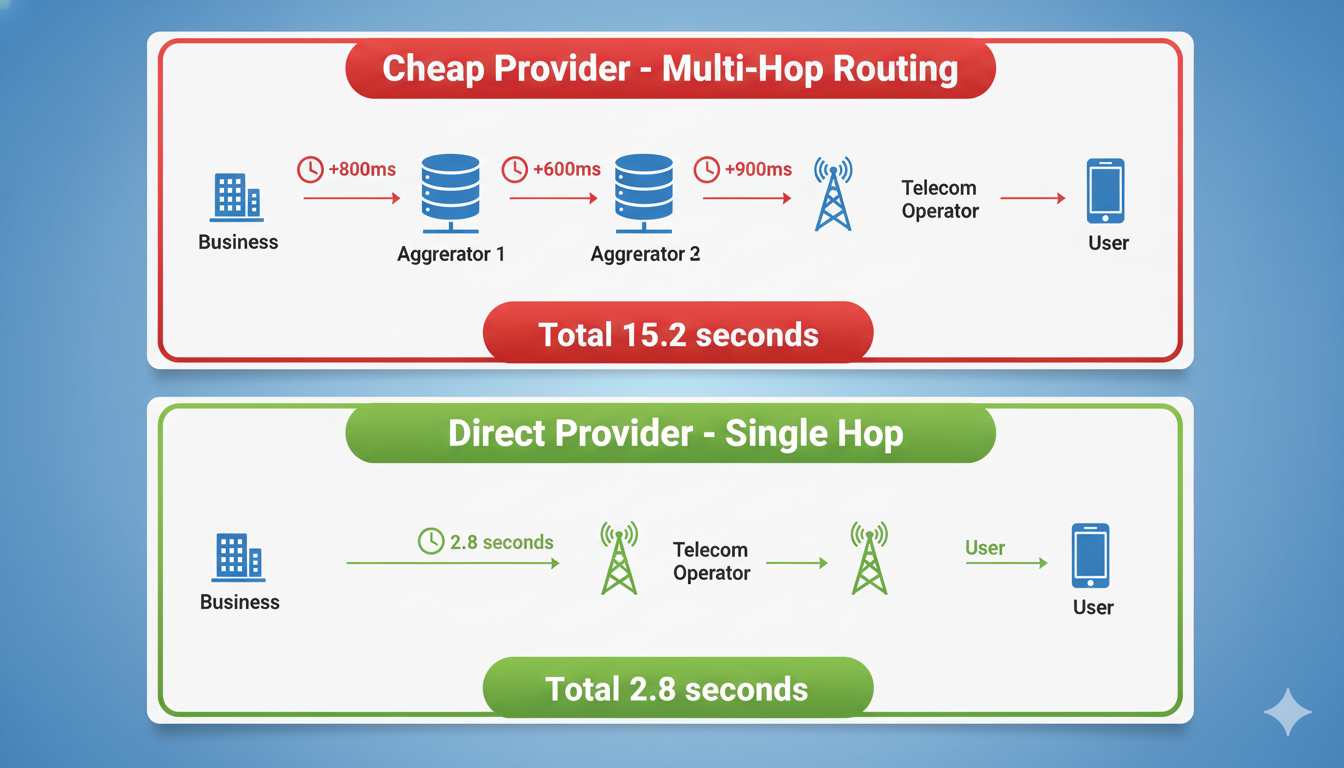
Yet here's what most OTP SMS service providers in India won't openly discuss: achieving consistent three-second delivery requires direct operator connections, which cost significantly more than standard routing. Cheap providers save money by daisy-chaining through multiple aggregators. Your OTP travels through four or five hops before reaching the end user.
Each hop adds 500-800 milliseconds. By the time you add network congestion and DLT verification delays, that "instant" OTP arrives twelve seconds later. Users think something broke. They try again. Now you've sent two OTPs for one verification, doubling your costs while frustrating the customer.
SMSGatewayHub.com maintains direct bilateral agreements with Jio, Airtel, Vi, and BSNL. Messages route through a single hop from our servers to operator networks. This architecture consistently delivers under four seconds, even during peak evening hours when networks see maximum load.
The Hidden Economics Nobody Explains Upfront
Most businesses evaluate OTP SMS service providers purely on per-message pricing. Someone quotes ₹0.15 per OTP. Another offers ₹0.12. You pick the cheaper option thinking you'll save 20% on SMS costs.
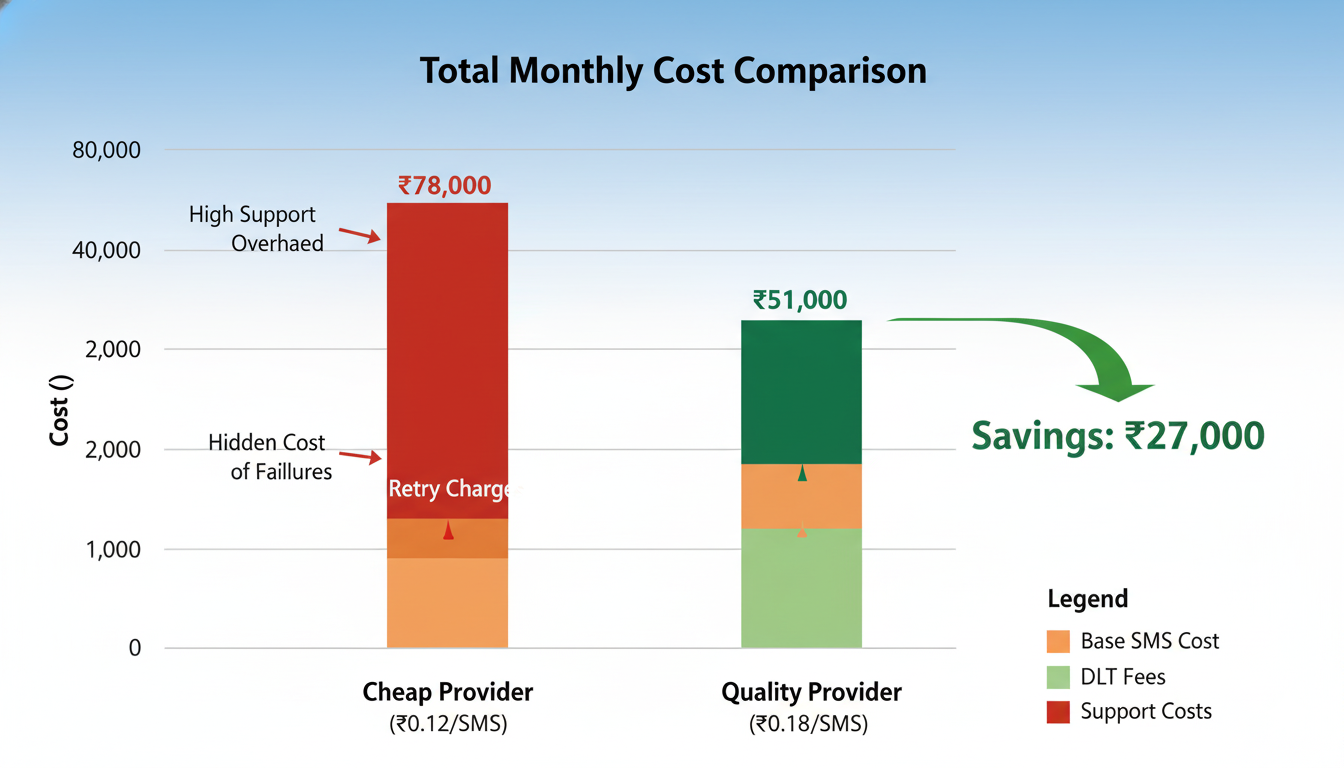
Then reality hits. The ₹0.12 provider delivers only 94% of messages successfully. You're sending 100,000 OTPs monthly. Six thousand users never receive their codes. Even if just 20% contact support, that's 1,200 tickets at ₹50 each to resolve—₹60,000 in support costs monthly.
Meanwhile, the ₹0.15 provider maintains 98.5% delivery rates. Only 1,500 failures. Maybe 300 support tickets. ₹15,000 in support costs. Your "cheaper" provider actually costs ₹60,000 monthly while damaging customer experience. The supposedly expensive option saves ₹45,000 while keeping users happy.
But the cost rabbit hole goes deeper. Some providers employ what the industry quietly calls AIT—Artificially Inflated Traffic. When your OTP fails to deliver, their system automatically retries through different routes. Sounds helpful until you realize they bill you for each retry attempt. That one OTP just cost three times the quoted rate, and most dashboards don't clearly show these retry charges.
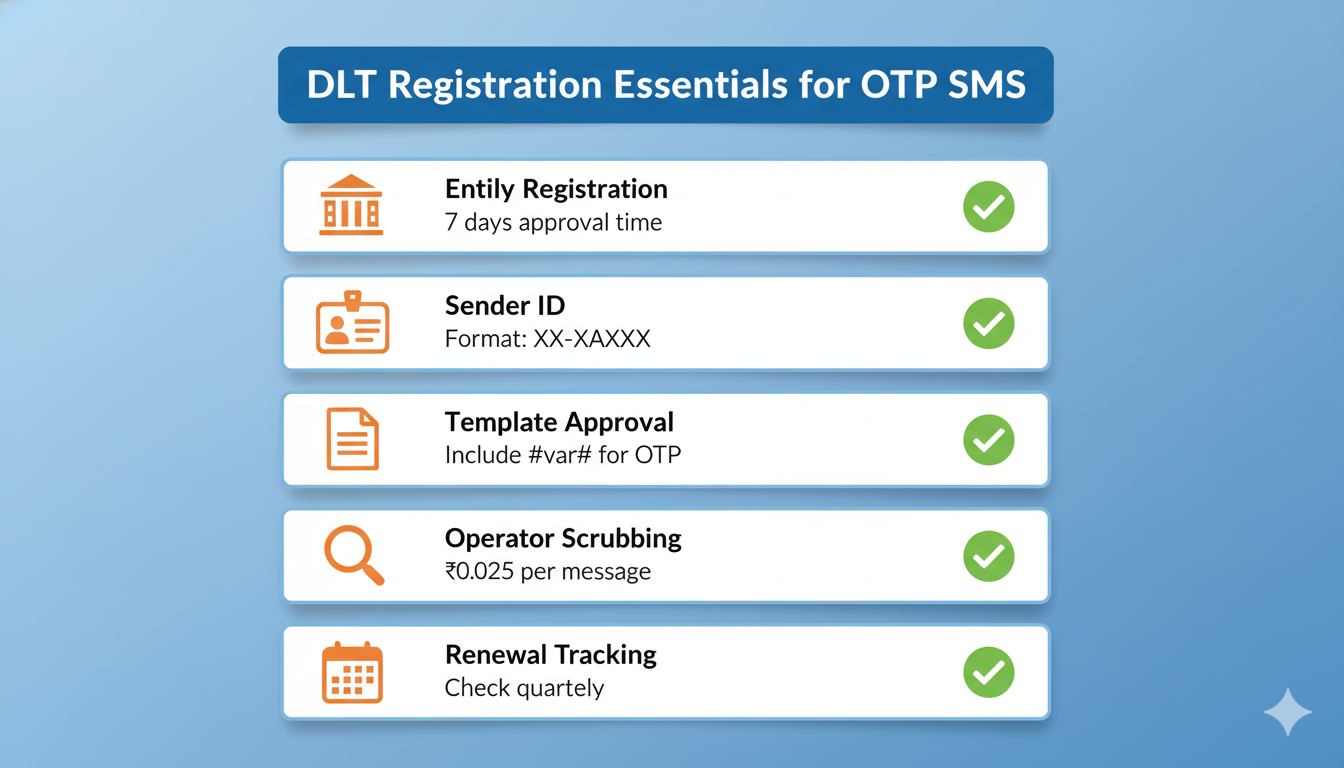
DLT scrubbing fees add another layer. Operators charge approximately ₹0.025 per message for regulatory compliance checking. Some OTP service providers include this in their base rate. Others add it as a separate line item. A third group charges it but conveniently forgets to mention it during sales calls.
International OTP delivery multiplies complexity further. Your Indian users travel abroad. They need OTPs while in Dubai, Singapore, or London. Suddenly your ₹0.15 per message becomes ₹2.50-4.50 depending on the destination country. Budget for it upfront or face billing surprises.
Security Threats Your Provider Should Handle But Often Doesn't
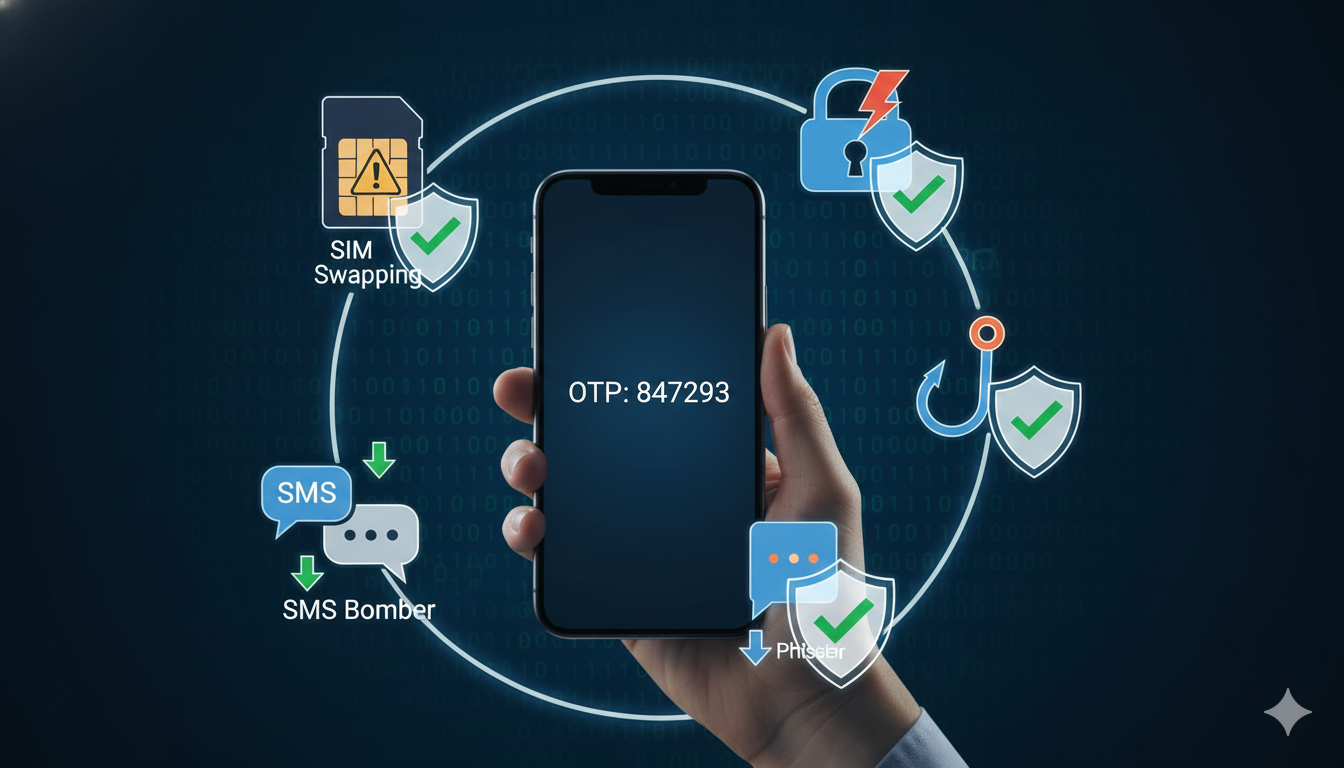
The term "SMS OTP bomber" sounds technical, but the attack is embarrassingly simple. Someone uses free online tools to trigger hundreds of OTP requests to a single phone number within minutes. The victim's phone explodes with verification codes. The attack serves multiple purposes—harassment, resource exhaustion attacks against your platform, or creating noise to hide a real fraud attempt.
Quality OTP SMS service providers in India implement rate limiting at the infrastructure level. A single phone number shouldn't receive more than three OTP requests in five minutes under normal circumstances. Anything beyond that triggers automatic blocking and alerts.
Yet many providers don't enforce these limits. They happily bill you for 500 OTPs sent to one number in an hour because each message generates revenue for them. Your platform gets abused, users get harassed, and you pay for it. Check whether your potential provider includes anti-abuse protections or just processes whatever you send them.
SIM swapping represents a more sophisticated threat. Fraudsters convince telecom operators to transfer a victim's number to a new SIM card they control. Once successful, every OTP meant for the victim lands in the attacker's hands instead. Banks and fintech companies track SIM swap events obsessively for this reason.
Best OTP SMS service providers in India now offer SIM swap detection through carrier integrations. They can flag when a number recently underwent a SIM change and suggest additional verification before processing high-value transactions. This capability separates enterprise-grade providers from commodity SMS gateways.
DLT Compliance: More Complex Than Anyone Admits
Every conversation about OTP SMS India eventually circles back to DLT registration. TRAI mandated this system to combat spam and fraud. In theory, it's straightforward—register your entity, get your templates approved, send messages.
In practice, DLT compliance creates ongoing headaches if your provider doesn't actively manage it. Templates expire. Renewals get missed. Operators update their scrubbing rules. Content that passed validation last month gets rejected today because somewhere in the TRAI guidelines, a comma placement changed.
Your OTP template might read: "Your verification code for TransactionApp is {#var#}. Valid for 10 minutes. Do not share this code." Simple enough. But did you register variations for different contexts? Login codes versus payment verification versus password reset? Each needs a separate template ID because the context differs.
Quality providers maintain template management systems that track expiration dates, automatically flag templates nearing renewal, and test messages against current operator rules before you push to production. They absorb the complexity so you can focus on building your product instead of debugging SMS delivery failures at 2 AM.
Don’t Miss These - DLT Registration in India - Complete Step by Step Guide
What the Delivery Metrics Actually Mean
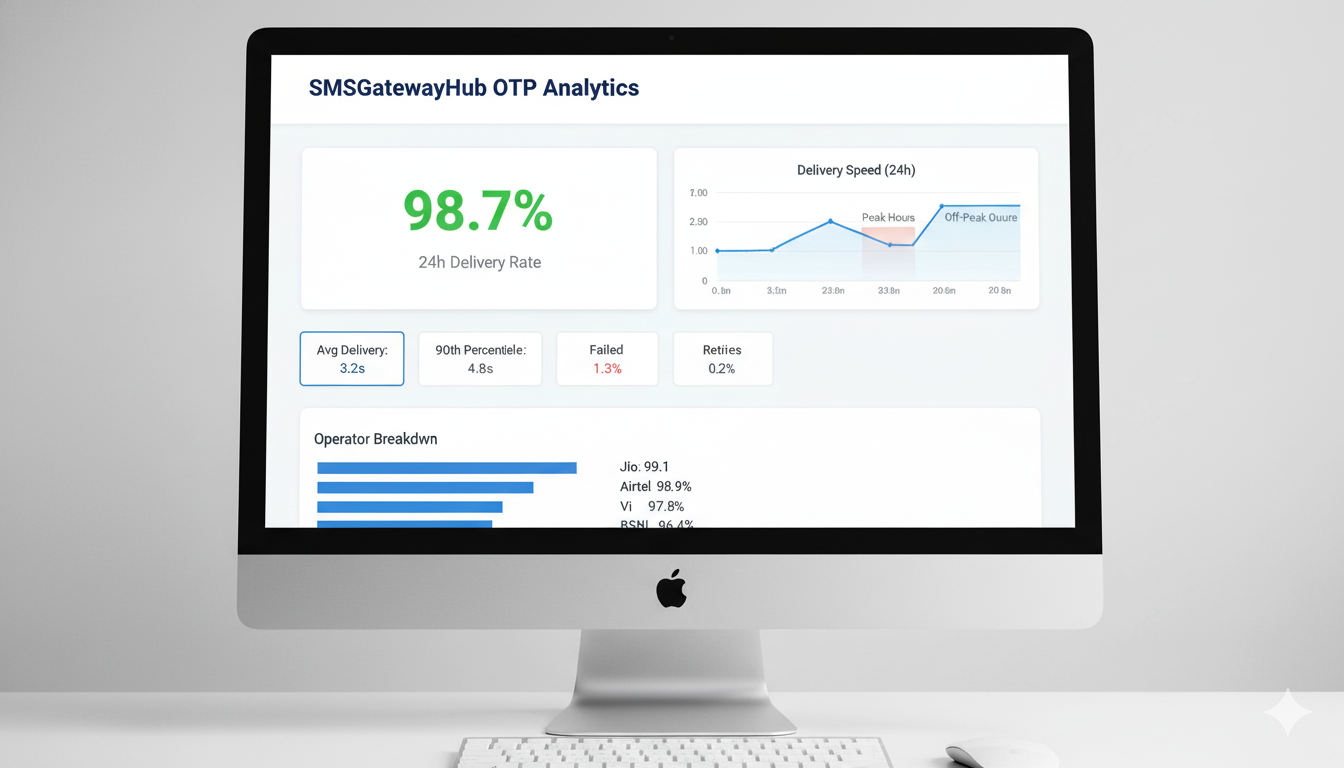
Every OTP service provider claims 99% delivery rates. Some even promise 99.9%. These numbers sound impressive until you understand how they're calculated.
"Delivery rate" often measures "accepted by operator" rather than "delivered to handset." An operator might accept your message into their network, count it as delivered in your dashboard, but the message never reaches the user because their phone is off, they're in a poor coverage area, or the operator's local infrastructure has issues.
Smart businesses track multiple metrics simultaneously. First, the submission rate—what percentage of API calls succeed versus fail immediately. Second, the operator acceptance rate—how many submitted messages get approved by telecom networks. Third, the actual delivery confirmation rate—messages that provably reached the end device.
Then monitor timing metrics. Average delivery speed matters less than the distribution. If your average is five seconds but 20% of messages take over thirty seconds, you have a problem. Track the 90th percentile and 95th percentile delivery times. Those outliers represent your worst user experiences.
Geography matters significantly too. OTP SMS delivery patterns differ across regions. Messages to metro cities like Mumbai and Delhi typically deliver faster than tier-3 towns. Operator coverage varies by area. Jio dominates in some regions while Airtel performs better in others. Your OTP SMS service provider in India should offer operator-level and region-level analytics so you can identify and fix specific trouble spots.
When Voice OTP Stops Being Optional
Rural India presents unique challenges for SMS-based verification. Network coverage can be spotty. Data connectivity is intermittent. SMS messages sometimes arrive hours late or not at all.
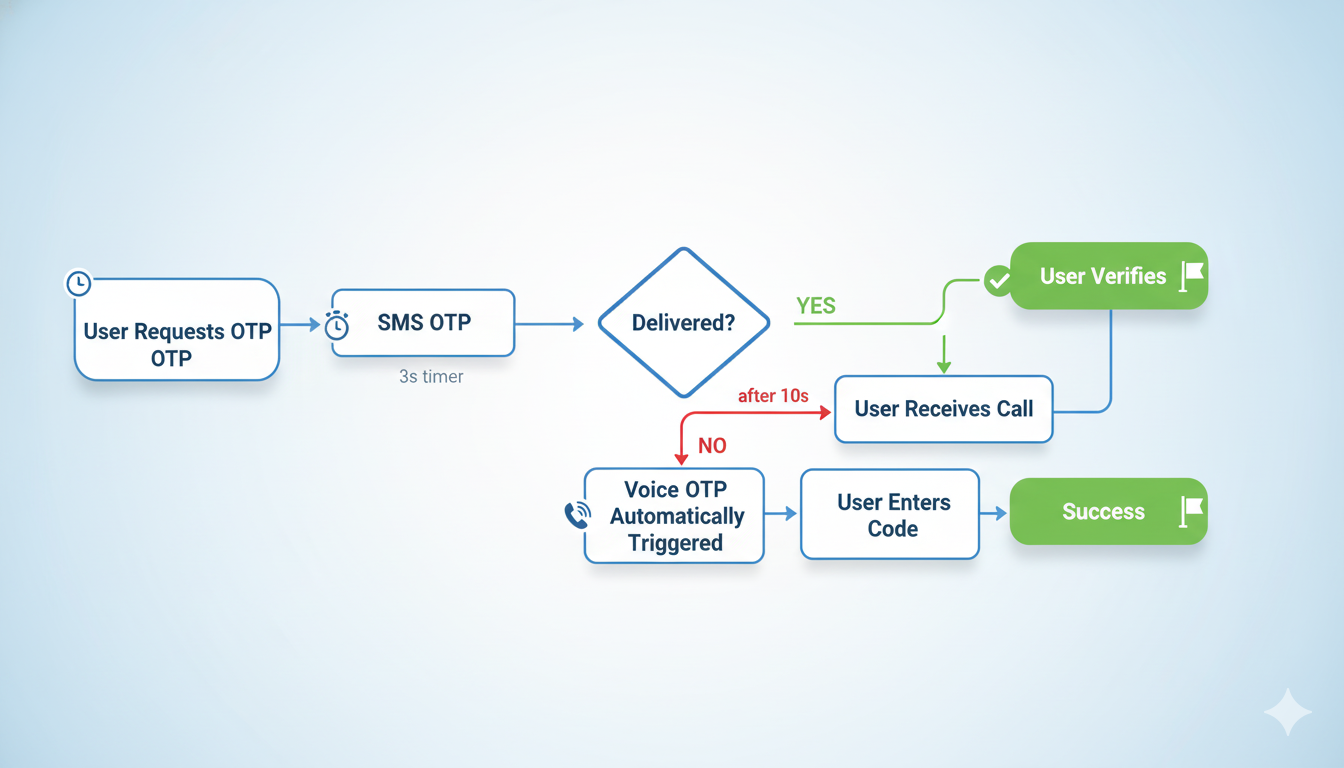
Voice OTP solves this by delivering verification codes through automated calls. The technology works on any phone—smartphones, feature phones, even landlines. An automated system calls the user and speaks the six-digit code clearly. Users enter what they hear to complete verification.
The best OTP SMS service providers in India offer automatic SMS-to-voice fallback. Your code tries SMS first. If delivery fails or times out after ten seconds, the system automatically triggers a voice call with the same code. Users get verified regardless of network conditions, and your conversion rates don't suffer.
Voice OTP costs more per transaction—typically ₹0.50-0.80 versus ₹0.15-0.20 for SMS. But calculate the ROI properly. If SMS fails 15% of the time in certain regions and voice backup converts 85% of those failures, you're gaining 12.75% additional successful verifications. For a payment platform processing ₹10 crore monthly, that's an extra ₹1.27 crore in completed transactions. The voice OTP cost is rounding error compared to that revenue gain.
The Emerging Threat to SMS OTP's Dominance
WhatsApp OTP is quietly reshaping authentication in India. Over 500 million Indians use WhatsApp daily. Messages deliver through data connections rather than SMS networks, often arriving faster and more reliably. The platform's end-to-end encryption provides better security than SMS. And crucially for businesses, WhatsApp OTP costs less per message than premium SMS routes.
The challenge? Users must have WhatsApp installed and have initiated contact with your business number first. This "opt-in" requirement makes WhatsApp unsuitable for first-time user verification. But for existing customers who've interacted with your brand before, WhatsApp OTP outperforms SMS across multiple dimensions.
Forward-thinking OTP service providers now offer unified verification APIs. Your code calls one endpoint. The system intelligently routes to SMS, WhatsApp, voice, or email based on user context, previous interactions, and real-time availability. You implement once and gain access to multiple channels without managing the complexity.
Integration: Where Most Implementations Go Wrong
The technical integration of OTP SMS seems straightforward. Call an API, pass the phone number and message, check the response. Yet I've debugged countless implementations that fail in subtle ways.
Consider retry logic. Your API call times out. Should you retry immediately? Wait three seconds? Give up? Most developers implement aggressive retries—if the first call fails, try again instantly, then again, then again. This creates duplicate OTPs, confuses users, and racks up unnecessary charges.
Better implementations use exponential backoff. First retry after two seconds. Second after four seconds. Third after eight seconds. Maximum three retries before switching to a fallback channel or showing an error. This approach respects rate limits, reduces duplicate messages, and fails gracefully when genuine problems occur.
Then there's the eternal debate: synchronous versus asynchronous OTP sending. Synchronous means your application waits for the SMS gateway to respond before continuing. Simple to implement but creates terrible user experience if the gateway has a slow day. Your entire checkout flow blocks for eight seconds waiting for OTP confirmation.
Asynchronous patterns send the OTP request and immediately continue. Show the user an input field for their code while the message goes out in the background. Use websockets or polling to detect when they've entered the correct code. If the SMS gateway has issues, your application doesn't freeze—users just wait slightly longer for their code to arrive.
SMSGatewayHub.com provides webhooks for delivery status callbacks. When your OTP delivers successfully (or fails), we POST that information to your specified URL instantly. Build robust flows that handle every scenario—successful delivery, failed delivery, provider timeouts, invalid phone numbers—without blocking your main application flow.
The Questions Nobody Asks During Vendor Evaluation
When businesses evaluate OTP SMS providers, they ask about delivery rates, pricing, and API documentation. Smart questions, but incomplete. Here are the questions that actually predict whether a provider will succeed or fail once you're in production.
"What happens to my messages during operator network outages?" Every telecom operator experiences occasional disruptions. Quality providers maintain redundant routing with automatic failover. If Airtel's Mumbai network has issues, messages automatically reroute through alternate paths or operators. Cheap providers just fail and blame the operator.
"How do you handle traffic spikes?" Your normal volume might be 10,000 OTPs daily. Then you run a marketing campaign and suddenly need 80,000 in two hours. Can the provider's infrastructure handle that surge without degrading delivery speed? Do they enforce hard rate limits that will throttle your growth?
"What's your incident response process?" When things go wrong at 2 AM—and they will eventually—how quickly does support respond? Is there on-call engineering available 24/7? Do you get a dedicated account manager or just a ticket system? The answers reveal whether they're a strategic partner or a commodity vendor.
"Can I see real-time delivery data?" Some providers update dashboards every fifteen minutes. Others show delays of hours. When debugging why OTPs aren't reaching users, real-time visibility makes the difference between fixing issues in minutes versus losing hours of revenue.
Best Bulk SMS Provider by City
- Best Bulk SMS Service in Chennai
- Get the Best Bulk SMS Provider in Mumbai
- Affordable Bulk SMS Services in Delhi
- Best Bulk SMS Service Provider in Bangalore
- Best SMS Service Provider in Noida
- Best Bulk SMS Service Provider in Jaipur
Best Bulk SMS Provider by Industry
- Best Bulk SMS Service Providers in India for Educational Institutes
- Best SMS Marketing Solutions for Healthcare Providers in India
- Bulk SMS Services for Transport Industry
- Bulk SMS Service for Logistics
- Improve Life Insurance Retention
- Real Estate Lead Generation with Bulk SMS India
- Bulk SMS for Schools
Building Resilience Into Your Authentication Flow
The best authentication systems never depend solely on one provider or one channel. Design for failure from day one because every system fails eventually.
Implement a provider abstraction layer in your code. Define a clean interface for OTP delivery operations—sendOTP(), verifyOTP(), checkStatus(). Build implementations for multiple providers behind that interface. If your primary provider experiences issues, you flip a feature flag and traffic switches to your backup provider without touching application code.
Store minimal user state on the backend, not the frontend. Don't trust the OTP code in cookies or local storage. Generate codes server-side, store them in Redis or your database with expiration timestamps, and verify against that backend state when users submit their codes. This prevents users from manipulating the verification process or bypassing it entirely.
Set appropriate code validity periods based on your use case. Banking transactions might warrant five-minute codes. Account registration can allow ten minutes. Password resets need shorter windows because they represent potential account takeovers. Match the validity to the security sensitivity.
Implement smart retry strategies for failed verifications. If someone enters the wrong code three times, don't immediately lock them out. Ask if they want a new code sent. Track how many OTPs a single session consumes. One or two resends is normal. Ten resends in an hour signals something wrong—fraud attempt, poor UX, or integration bugs.
Start messaging today - Developer SMS API Free SMS Gateway Developer API
What 2026 Brings: Regulatory Changes on the Horizon
India's OTP landscape will shift significantly in 2026. The Reserve Bank of India directed banks and payment platforms to offer authentication alternatives beyond SMS by April 2026. This doesn't ban OTP SMS—it just requires options.
Most banks will implement app-based push notifications as the primary alternative. Users get a notification asking "Approve this ₹5,000 transaction?" with yes/no buttons. Faster than typing codes and harder to phish. But it requires users to have the bank's app installed and working properly.
TRAI continues tightening DLT requirements. Expect more template validation rules, stricter sender ID regulations, and enhanced anti-spam measures. These changes aim to improve customer experience but create complexity for businesses. Your OTP service provider should track regulatory developments and update their infrastructure proactively rather than scrambling after new rules take effect.
The broader shift toward digital identity verification will eventually reduce OTP dependency. Aadhaar-based authentication, unified payments interface with biometric approval, and device-level hardware authentication all compete with traditional OTP. But SMS OTP isn't disappearing anytime soon—it remains the only verification method that works universally across every phone and every network.
Read more Automation -Enterprise SMS Gateway India | High-Speed Automation & Delivery
Making Your Decision
Choosing an OTP SMS service provider in India comes down to three core questions. First, can they deliver reliably under your worst-case scenarios—peak load, network issues, operator problems? Second, do their economics work at your scale—not just base pricing but total cost including failures, retries, and support? Third, will they evolve with you as your needs grow more sophisticated?
Test thoroughly before committing. Send OTPs through multiple providers simultaneously. Track delivery times, success rates, and cost per successful verification. Run load tests. Verify their monitoring tools actually work. Check if support responds quickly to problems.
Start with providers offering free trials or low-commitment starter plans. Send your first 10,000 OTPs before negotiating volume contracts. The data you gather during this pilot phase reveals truth that no sales presentation ever will.
And recognize that the cheapest option rarely costs less overall. Factor in developer time debugging issues, support costs handling failures, and revenue lost to abandoned verifications. Sometimes paying ₹0.18 per OTP instead of ₹0.12 saves massive money when you account for the complete picture.
SMSGatewayHub.com offers flexible starting plans with no long-term commitments. Test our delivery speeds, try our API, evaluate our dashboard, and scale up when you're confident we're the right partner. We succeed when you succeed—not by locking you into contracts but by consistently delivering the reliability your authentication system demands.
Ready to implement OTP SMS that actually works? SMSGatewayHub.com delivers under 4 seconds with 98.5%+ success rates, automatic DLT compliance, and 24/7 technical support. Start with 10,000 free OTP credits to test our service in your actual production environment.
Start messaging today -How to Choose Best SMS Gateway Provider India
FAQ Section (SMS OTP Service Providers in India)
FAQ 1: What is OTP SMS service and how does it work?
Answer: OTP SMS service delivers one-time password codes to users' mobile phones for authentication and verification. When someone tries to log in, make a payment, or reset their password, your system generates a unique 4-6 digit code and sends it via SMS through a gateway provider. The user enters this code to prove they control that phone number. In India, OTP messages route through DLT-registered channels and must comply with TRAI regulations. Quality providers deliver these codes within 3-5 seconds through direct operator connections with Jio, Airtel, Vi, and BSNL.
FAQ 2: How much does OTP SMS cost in India?
Answer: OTP SMS typically costs ₹0.15 to ₹0.22 per message in India, but the real cost includes several hidden factors. DLT scrubbing fees add approximately ₹0.025 per message. Failed deliveries that trigger automatic retries can triple your per-OTP cost without clear dashboard visibility. International delivery costs ₹2.50-4.50 per message. The cheapest provider at ₹0.12 per SMS with 94% delivery rate actually costs more than a ₹0.18 provider with 98.5% delivery when you factor in support costs from failed verifications. Calculate total cost per successful verification, not just per-message pricing.
FAQ 3: What is the difference between OTP SMS service provider and regular bulk SMS?
Answer: OTP SMS service providers specialize in time-critical authentication messages requiring sub-5-second delivery, while regular bulk SMS handles promotional or informational messages where timing matters less. OTP providers maintain premium routing through direct operator partnerships, offer 24/7 delivery (promotional SMS restricted to 9 AM-9 PM), bypass DND restrictions for legitimate verification, provide real-time delivery webhooks, and include security features like rate limiting and SIM swap detection. They typically cost 2-3x more than promotional SMS but deliver 99%+ success rates versus 92-95% for standard routing.
FAQ 4: How do I choose the best OTP SMS service provider in India?
Answer: Test delivery speed during peak hours (6-9 PM) across all major operators—anything over 8 seconds is too slow. Verify actual delivery rates by sending 500+ test messages and tracking failures. Check if they offer direct operator connections (not multi-hop routing through aggregators). Confirm automatic DLT template management and renewal tracking. Ask about their incident response time—24/7 support matters when authentication breaks at 2 AM. Review their retry logic to avoid duplicate OTP charges. SMSGatewayHub.com offers free trial credits to test these factors in your production environment before committing to volume contracts.
FAQ 5: Is OTP SMS secure in 2026?
Answer: OTP SMS remains secure for most use cases in India, though it's not invulnerable. SIM swapping poses the biggest threat—fraudsters convince telecom operators to transfer numbers to new SIM cards they control. The RBI mandated that banks offer OTP alternatives by April 2026, not because SMS OTP is insecure, but to provide options for different risk levels. For everyday transactions, SMS OTP with proper implementation (5-minute expiration, rate limiting, SIM swap detection) provides adequate security. High-value transactions should combine SMS OTP with additional factors like biometric verification or app-based authentication.
FAQ 6: What is SMS OTP bomber and how do I protect against it?
Answer: SMS OTP bomber refers to tools or scripts that flood a phone number with hundreds of verification code requests, either for harassment or as a cover for actual fraud attempts. Protection requires implementing rate limits at your application layer (maximum 3 OTP requests per number in 5 minutes) and choosing an OTP service provider that enforces infrastructure-level abuse prevention. Quality providers automatically block suspicious patterns—like 50 OTP requests from one IP address targeting different numbers—and alert you to potential attacks. Monitor for unusual spikes in OTP volume as an early warning system.
FAQ 7: Can OTP SMS work internationally for Indian businesses?
Answer: Yes, but international OTP delivery costs significantly more and requires additional considerations. Messages to Indian numbers abroad typically cost ₹0.50-1.50 in nearby countries (UAE, Singapore) and ₹2.50-5.00 in Europe or Americas. Delivery times increase to 8-15 seconds due to international routing. Some countries require local sender ID registration before accepting messages. The best OTP SMS service providers in India maintain global operator relationships and handle country-specific compliance automatically. Budget 3-5x your domestic per-message cost for international users and implement voice OTP as a backup for countries with poor SMS delivery rates.
FAQ 8: What happens if OTP SMS delivery fails?
Answer: Failed OTP delivery stems from several causes: invalid or ported phone numbers, operator network issues, DND blocks (though OTP should bypass these), phone switched off, or DLT template mismatches. Quality providers send immediate delivery status via webhooks so your application knows within 5 seconds if an OTP failed. Best practice is implementing automatic fallback—after two failed SMS attempts, trigger voice OTP where an automated call speaks the code. This ensures users can always verify regardless of network conditions. Track failure rates by operator and region to identify systematic issues requiring provider intervention.
FAQ 9: Do I need separate DLT registration for OTP messages?
Answer: Yes, OTP SMS requires specific DLT template registration in India. You cannot send OTP messages using promotional or transactional templates—they need their own category and template IDs. Your OTP template must include your brand name, clearly state it's a verification code, show the actual OTP using {#var#} placeholders, and include validity period and security warnings. Template approval takes 5-7 business days initially. The best OTP service providers manage this entire process through their dashboards, automatically applying correct template IDs to your messages and tracking renewal dates so you're never caught with expired templates during critical moments.
FAQ 10: What is the ideal OTP expiry time?
Answer: Standard OTP validity is 5-10 minutes, but optimize based on your use case. Login verification can allow 10 minutes since there's minimal fraud risk. Payment authentication should use 5 minutes maximum—shorter windows reduce the time attackers have to manipulate users into revealing codes. Password reset OTPs warrant even tighter 3-minute windows since they grant account access. Balance security with user experience—too short (1-2 minutes) frustrates legitimate users who need time to retrieve messages, check other apps, and return to your site. Monitor completion rates: if only 60% of users verify within your window, extend it slightly.
ABOUT THE AUTHOR
This guide is written by SMSgatewayHub - India's trusted bulk SMS service provider since Oct 2010.
We send 1000 million+ Bulk daily to protect Indian citizens and businesses.
Need help with DLT registration? 📞 Call: +91-9907922122 📧 Email: support@smsgatewayhub.com
To Find Related Articles-